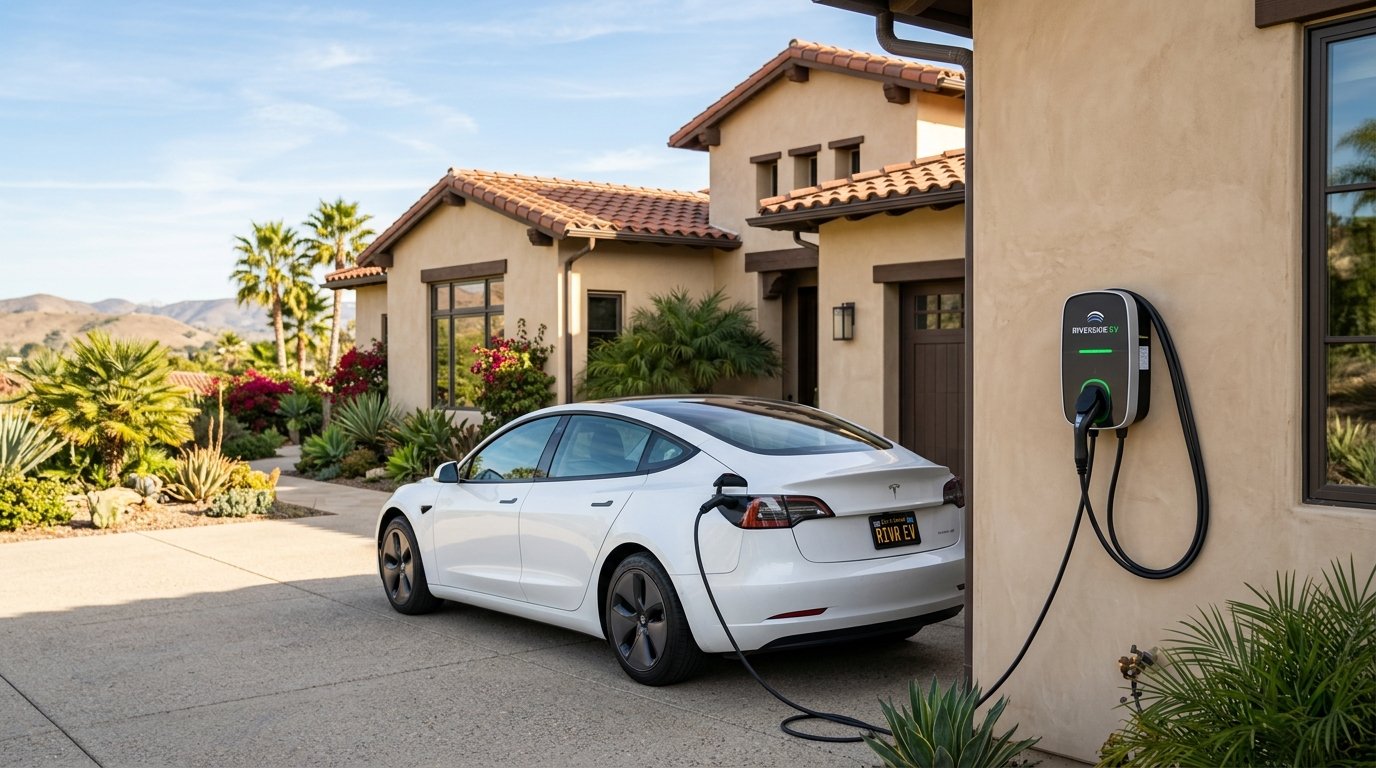
Riverside Public Utilities currently offers a level 2 EV charger rebate of up to $1,500 for eligible home charging projects. Customers enrolled in RPU’s SHARE Program may qualify for up to $2,500. The rebate can help cover the charger, permit, labor, and other eligible installation costs.
The program is only for eligible RPU electric customers. It also has rules for the charger, permits, inspection, receipts, and application timing. If you plan to install a Level 2 charger in Riverside, checking these rules before buying equipment can help you avoid missing the rebate.
How Much Is the Riverside Level 2 EV Charger Rebate?
The standard RPU EV charger rebate is worth up to $1,500. Customers who are already enrolled in the SHARE Program may qualify for an extra $1,000. That raises the maximum rebate to $2,500.
The word “up to” matters. RPU says the rebate is based on the actual eligible cost of the charger and installation. The rebate cannot be more than the eligible project cost.
For example, if your eligible charger and installation costs total $1,100, the normal rebate cannot become $1,500. Your project cost sets the limit.
This makes the program useful for both simple and more costly Level 2 charging projects.
Who Qualifies for the RPU EV Charger Rebate?
You must be an active Riverside Public Utilities electric customer. The charger must also be installed at the home tied to your RPU electric service account.
This point is easy to miss. Living in Riverside does not by itself prove that you qualify. The home must be inside RPU’s electric service territory.
The charger must be a new Level 2 unit. RPU also requires it to be wall-mounted at the service address listed on the rebate application.
The program allows only one residential charger rebate per household every three years. Funding is also limited and is offered on a first-come, first-served basis.
If you are unsure about your local service area, Fowles Electric’s Riverside electrician page provides more information about electrical service in Riverside.
Does the SHARE Program Increase the Rebate?
Yes. RPU customers enrolled in the Sharing Households Assist Riverside’s Energy, or SHARE, Program can qualify for a larger charger rebate.
The normal maximum is $1,500. Active SHARE customers may receive an extra $1,000, bringing the possible total to $2,500.
SHARE is an income-based utility assistance program. RPU currently bases income eligibility on 250% of the federal poverty guideline and household size. These limits can change, so homeowners should check the current SHARE rules before applying.
You must already be actively enrolled in SHARE to receive the added charger rebate. Simply meeting an income level does not by itself add the extra $1,000.
What Costs Can the EV Charger Rebate Cover?
The EV charger installation rebate can apply to several parts of an eligible project. RPU states that the rebate can cover charging equipment, permits, labor, and installation costs.
That is useful because the charger itself is only one part of the final cost.
A home may also need a new dedicated circuit, wire, conduit, breaker, mounting work, and permit. The amount of work depends on the house and where the charger will be placed.
The rebate does not mean every electrical item is covered. RPU states that a new or existing 240-volt outlet itself is not an eligible incentive item, even though an eligible plug-in charger may use that outlet.
Keep all charger and installation receipts. RPU requires them when you apply.
How Much Does Level 2 EV Charger Installation Cost?
The final price depends on the charger and the home’s electrical setup. EPA currently places Level 2 charging equipment at about $400 to $1,000. It gives a broad installation range of about $300 to $2,000.
These are general planning figures, not fixed Riverside prices.
A short wire run from a nearby panel may cost less. A longer run through walls or outdoor areas can need more labor and materials.
Higher charger power can also affect the circuit size. Panel capacity matters too. If the panel cannot support the added load, more electrical work may be needed.
The RPU rebate can lower the out-of-pocket cost when the project meets the program rules.
For a broader look at installation, chargers, panels, and local requirements, read our guide to home EV charger installation in Riverside.
What Type of Level 2 Charger Qualifies?
RPU has clear rules for an eligible Level 2 charger. The unit must be new and use a 240-volt AC setup for residential charging.
The charger must use an SAE J1772 connector or SAE J3400, which includes the connector commonly linked with Tesla and the North American Charging System. RPU also requires the charger to be certified by a nationally recognized testing laboratory.
The charger must also be wall-mounted at the home listed on the application.
These rules make it smart to check the model before you buy. A charger that does not meet RPU’s current program rules could affect rebate eligibility.
Does a Plug-In Level 2 Charger Qualify?
Yes. RPU states that eligible plug-in Level 2 chargers can receive the rebate. A plug-in charger connects to a compatible 240-volt outlet rather than being wired straight into the electrical system.
However, RPU does not give a rebate for the outlet itself.
If you plan to use an existing 240-volt outlet, RPU says you are responsible for making sure it matches the charger’s plug and electrical load. The utility advises checking with a licensed electrician if you are unsure.
That check matters because an outlet can physically fit a plug but still be part of a circuit that is not right for the charger load.
What About a Hardwired EV Charger?
A hardwired charger is connected directly to its dedicated circuit instead of plugging into a wall outlet.
RPU’s current rules require an electrical permit from the City of Riverside Building and Safety Division when installing a hardwired EV charger. A permit is also required when adding or changing a 240-volt power socket for EV charging.
Hardwired charging can work well for a charger that will stay in one place. Plug-in charging can offer more flexibility.
The right choice depends on the charger, electrical panel, parking location, and your plans for the home.
Fowles Electric’s EV charger installation service covers Level 2 circuits, panel checks, charger mounting, and related electrical work.
Do You Need a Permit for an EV Charger in Riverside?
A permit is required for a hardwired charger or a new or changed 240-volt socket used for the charging setup. RPU lists this as part of its rebate rules.
The City of Riverside also provides specific residential EV charging station guidance through its Building and Safety Division.
The permit step matters for the rebate because RPU asks for a copy of the final Building or Electrical Inspection sign-off.
That sign-off is given after the charging station has been installed and checked by the Riverside Building Inspector.
Do not wait until the rebate application to think about permits. Plan this part before the electrical work starts.
What Documents Do You Need for the RPU Rebate?
RPU requires several items to prove that the charger and installation meet the program rules.
You will need a photo of the installed charger, a photo of its serial number, the Riverside Building or Electrical Inspection sign-off, and copies of all charger purchase and installation receipts.
Missing paperwork can slow down the application or lead to a denial. The 2026 application tells customers to include all required documents with the signed form.
It is a good idea to create a small project folder before installation starts. Save the charger receipt, electrician invoice, permit records, and inspection papers in one place.
That makes the final rebate application much easier.
How Long Do You Have to Apply?
RPU says the charger rebate application must be submitted within 180 days of the completed installation.
That gives homeowners time to finish the work and collect the needed records. Still, there is little benefit in waiting until the deadline gets close.
The incentive also depends on available funding. RPU says the offer is first-come, first-served and can end when funds run out or the program is stopped.
Applying soon after the final inspection can reduce the chance of lost paperwork or a missed deadline.
How Do You Apply for the Riverside EV Charger Rebate?
The process starts with making sure you are an active RPU electric customer and that your planned charger meets the program rules.
Next, have the electrical setup checked. Your electrician can look at the panel, available capacity, charger location, and need for a new 240-volt circuit.
Complete any required permit steps before or during the project. After installation, the City inspection must be completed when required.
Then gather your charger photo, serial number photo, inspection sign-off, and receipts. Submit the RPU rebate application within 180 days of the completed installation.
RPU says approved rebates of $500 or more are normally sent by check. Its current application asks customers to allow about six to eight weeks for processing.
Should You Check the Rebate Before Buying a Charger?
Yes. Checking the rules first can save time and money.
The charger must meet RPU’s connector, testing, mounting, and equipment rules. The program also depends on available funds. Buying first and checking later may leave you with a charger that does not fit the rebate terms.
It also helps to check your electrical panel before choosing charger amperage. A licensed electrician can see how much capacity is available and what circuit the charger will need.
This lets you plan the charger and installation as one project instead of dealing with surprise electrical work later.
Fowles Electric works with homeowners across Riverside and the Inland Empire on home EV charging projects.
Frequently Asked Questions
How much is the Level 2 EV charger rebate in Riverside?
The current level 2 EV charger rebate from Riverside Public Utilities is up to $1,500. Customers actively enrolled in the SHARE Program may qualify for up to $2,500. The rebate cannot be higher than the eligible project cost.
Can the Riverside rebate pay for installation labor?
Yes. RPU says eligible rebate costs can include the charger, permits, labor, and installation. Keep all receipts because RPU requires them with the rebate application.
Does a new 240-volt outlet qualify for the rebate?
The outlet itself does not qualify for the incentive. However, an eligible plug-in Level 2 charger can qualify. A new or changed 240-volt socket also requires the proper City electrical permit.
Do I need a City inspection to get the rebate?
RPU requires a copy of the Building or Electrical Inspection sign-off from the Riverside Building Inspector as part of the application documents.
Can renters apply for the EV charger rebate?
The RPU application states that applicants can be owners or tenants of the property where the work was installed. The customer still needs to meet the program rules, and a renter should get any needed property-owner approval before making electrical changes.
How often can I claim an RPU charger rebate?
RPU currently limits the program to one Level 2 residential charger rebate per household every three years.
Plan Your Level 2 EV Charger Installation in Riverside
The level 2 EV charger rebate can make home charging easier to afford for Riverside homeowners. RPU currently provides up to $1,500 for eligible projects, while SHARE customers may qualify for up to $2,500.
The key is to plan before you buy. Check RPU eligibility, choose a charger that meets the rules, review your panel capacity, get the required permit, and keep every receipt and inspection record.
If you need help planning the electrical side of your home charging project, contact Fowles Electric to discuss your charger, panel, circuit, and Riverside installation needs.