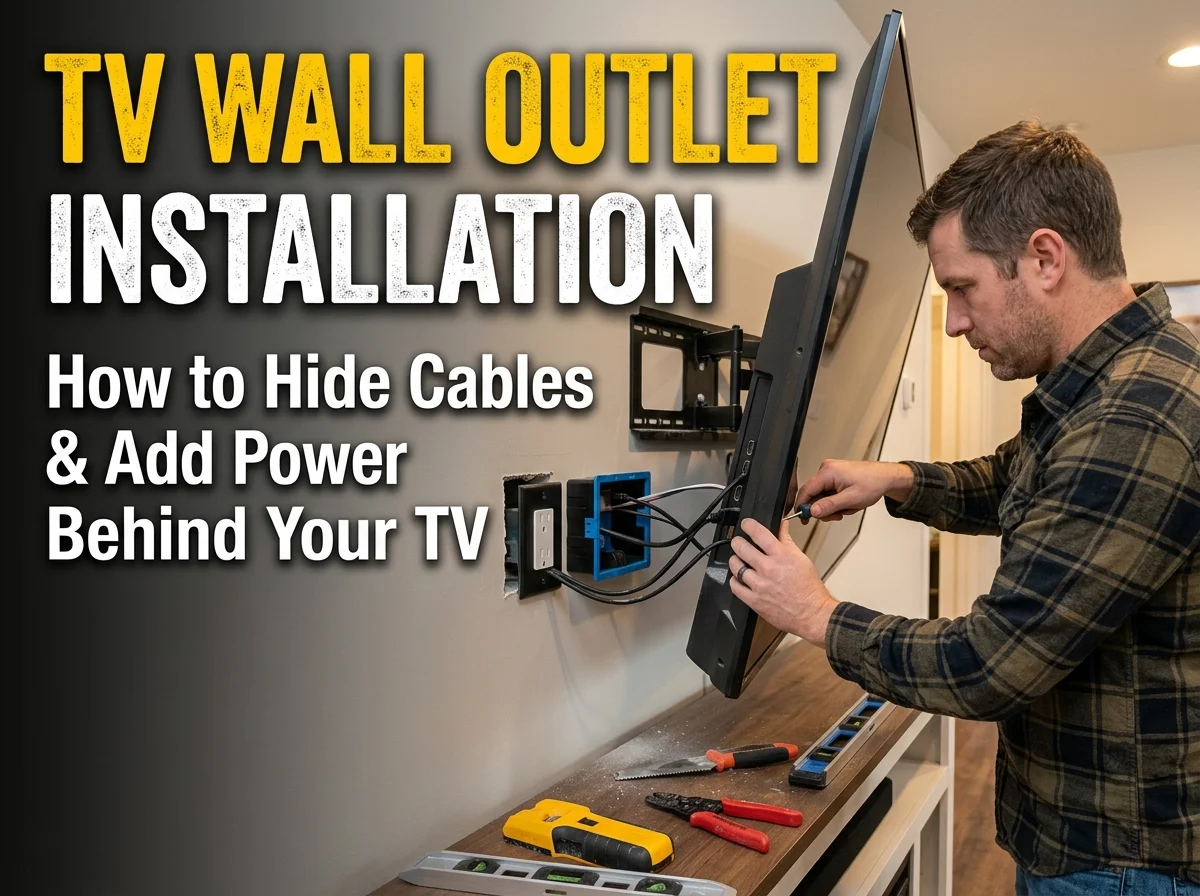
A wall-mounted television looks much cleaner when the power cable, HDMI cables, and device connections do not hang below it. But achieving that polished look requires more than simply tucking wires behind the drywall. The power source, electrical box, cable route, wall construction, and TV position all need to work together.
A proper TV Wall Outlet Installation creates a dedicated connection where the television actually sits while keeping the entertainment area practical. When upgrading a living room with a media wall or home theater setup, it’s important to plan the electrical work before installing the TV mount.
The Best Outlet Location Starts With the TV, Not the Floor
Many older entertainment setups were designed around a television sitting on furniture. The existing outlet may therefore be several feet below the screen, leaving a power cable visible after the TV is mounted.
The outlet for a wall-mounted TV should be placed to suit the equipment, not at an arbitrary or standard height. The final location depends on:
- The size and mounting position of the television
- The TV bracket design
- Where the power connection sits on the TV
- The location of studs
- Other equipment that needs power
- Whether a soundbar or home theater system is being installed
Planning these points together helps avoid drilling multiple holes or discovering that the bracket covers the new wall plate.
What Should Actually Go Inside the Wall?
TV power wiring requires different considerations than low-voltage cables, especially when both are being concealed behind a wall.
HDMI cables, Ethernet cables, and certain other low-voltage wiring have different installation requirements from branch-circuit electrical wiring. A television power cord should not simply be routed loose inside a wall like an HDMI cable.
A professional installation instead considers the appropriate electrical box, wiring method, wall plate, and cable pathway. This is where an electrician for TV outlet installation becomes useful: the visible result may look simple, but the wiring behind it still needs to be installed correctly.
A Recessed Outlet Makes More Room Behind the Screen
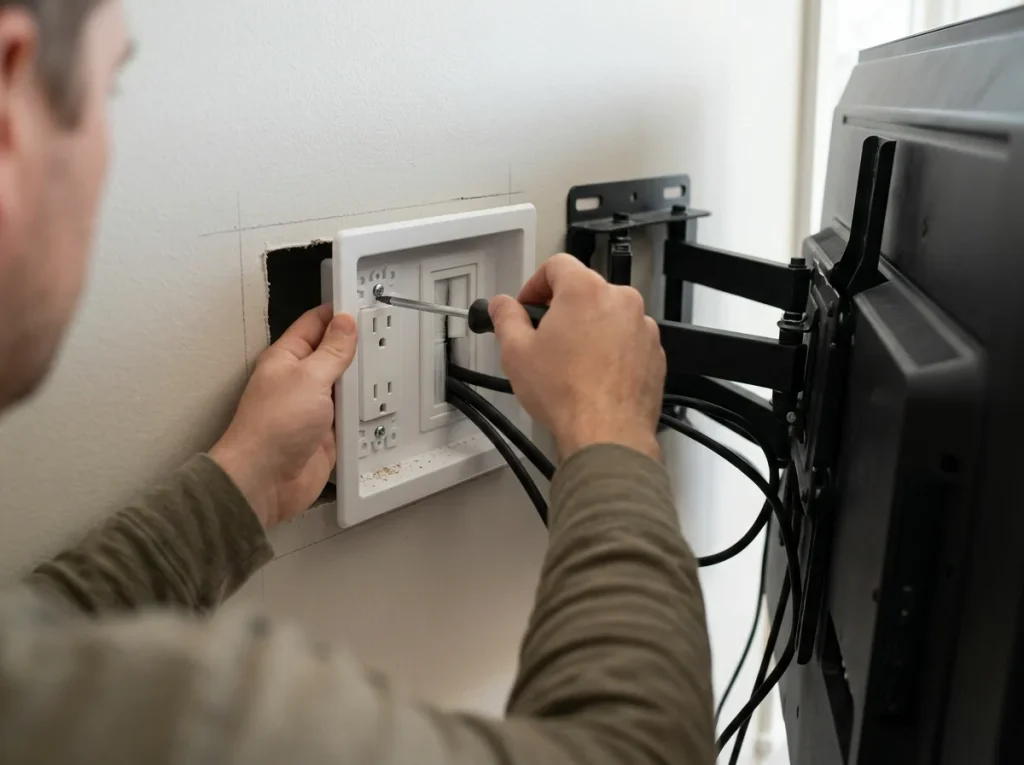
While a regular outlet can provide power, a recessed outlet creates a cleaner fit behind a wall-mounted TV. Its design provides additional clearance for the TV plug and helps the screen sit closer to the wall.
This becomes especially useful with:
- Slim television mounts
- Large-screen TVs
- Fixed mounting brackets
- Media walls with limited depth
- Installations where the existing plug is bulky
The outlet should still remain accessible enough for servicing. The objective is clean cable concealment, not making the electrical connection impossible to reach.
Redlands Homes Need Local Electrical Planning
Redlands has a warm, dry climate, and the city recorded a temperature of 114.1°F on September 6, 2024, its hottest recorded temperature. That does not mean a TV outlet requires special wiring simply because of the climate, but it is another reason residential electrical work should be performed with proper materials and connections rather than improvised cable solutions.
Local permitting also matters. In Redlands, electrical permits are handled by the city’s Building & Safety Division, which also oversees inspections for electrical alterations. The city’s requirements indicate that projects involving the installation or replacement of outlets and circuits may require an electrical permit.
The Circuit Behind the TV Deserves a Quick Check
Installing a new receptacle does not necessarily mean the TV requires a dedicated electrical circuit. A circuit load assessment helps determine whether the existing electrical system is suitable for the planned equipment.
Consider everything that will operate in the area:
| Equipment | Why it matters |
| Smart TV | Main continuous load |
| Soundbar | Additional powered equipment |
| Streaming device | Small load but adds another connection |
| Game console | Higher combined demand |
| AV receiver | Potentially significant load |
| Powered speakers | Additional electrical demand |
A new outlet should not simply be added because the wall looks empty. Before making any changes, an electrician can trace the existing circuit, identify the other devices connected to it, and verify that the system can safely handle the additional electrical load.
Your HDMI Setup Needs Its Own Plan
Power and signal cables often need to travel to different locations. A TV may connect to a streaming device, gaming console, sound system, Blu-ray player, or receiver located several feet away.
It’s best to determine the necessary connections while the wall is still accessible, before the drywall is installed.
For example, a homeowner installing a TV today may need HDMI and Ethernet connections, but adding an extra pathway during the electrical work may make future equipment changes easier. Good TV cable management installation considers the equipment that is likely to remain in the room rather than creating an oversized bundle of unnecessary wiring.
Do Not Let the Wall Mount Decide Everything
The wall itself presents another planning issue. Stud placement affects where the television bracket can be anchored, while the same studs can influence where an electrical box or cable pathway can be installed.
Drywall electrical work also needs to account for what is already inside the wall. Existing electrical wiring, plumbing, insulation, and structural components should be considered before cutting.
That is why measuring the TV, mount, outlet position, and cable destinations together is more reliable than installing the outlet first and hoping everything lines up afterward.
A Well-Planned Media Wall Requires More Than Power
A larger entertainment setup may need several coordinated connections. Instead of treating the television as the only electrical device, plan the complete wall.
A practical setup may include:
Upper connection: Power for the wall-mounted TV.
Signal pathway: HDMI, Ethernet, or other low-voltage cables.
Lower connection: Provides power and connectivity for devices kept inside the media console.
Audio location: Appropriate wiring for a soundbar or speakers.
Service access: Enough room to disconnect equipment without removing the television.
This approach reduces visible wires while keeping the system usable when equipment needs to be replaced.
When Professional Installation Makes More Sense
Installing a wall plate is one thing. Installing a new outlet behind a TV requires proper wiring, an approved electrical box, circuit planning, and compliance with local requirements.
Fowles Electric Inc can evaluate the existing power source, determine where the new outlet should go, and coordinate the electrical portion of the TV installation with the wall-mounted layout.
Professional work is particularly useful when the project involves a new circuit, older wiring, multiple outlets, drywall modifications, or a larger home theater system.
Frequently Asked Questions
Can I install an outlet behind a wall-mounted TV?
Yes, an electrician can install an electrical outlet at an appropriate location behind a wall-mounted TV when the wall and existing electrical system allow it. The work should account for the TV bracket, studs, electrical box, circuit capacity, and applicable code requirements.
Is a recessed outlet better for a wall-mounted TV?
A recessed outlet often works well because it gives the television’s plug more space behind the screen. It is especially useful when a slim TV mount leaves very little clearance between the television and wall.
Can HDMI cables and electrical wiring share the same wall space?
They should not simply be bundled together without considering the applicable installation requirements. Power wiring and low-voltage wiring have different considerations. Proper separation and approved installation methods help reduce interference and maintain electrical safety.
Is a permit required to add an electrical outlet in Redlands?
It may. The City of Redlands identifies electrical permits and additions or replacements of outlets and circuits within its electrical permitting guidance. Because permit rules vary by project, homeowners should confirm the requirements with the city’s Building & Safety Division before starting work.
Should I install the outlet before mounting the TV?
Planning should happen before mounting the TV. The outlet location, bracket position, studs, cable routes, and equipment connections should be coordinated first. This reduces the chance of placing the electrical box where the bracket or television interferes with it.
Final Thoughts: Build the Power Into the Entertainment Setup
A clean television installation starts behind the wall. The right outlet location, appropriate electrical box, sensible cable pathways, and adequate circuit capacity help create a setup that looks better without sacrificing safe access to the electrical system.
Fowles Electric Inc provides the electrical expertise needed to turn a basic wall-mounted TV setup into a properly planned residential electrical upgrade.