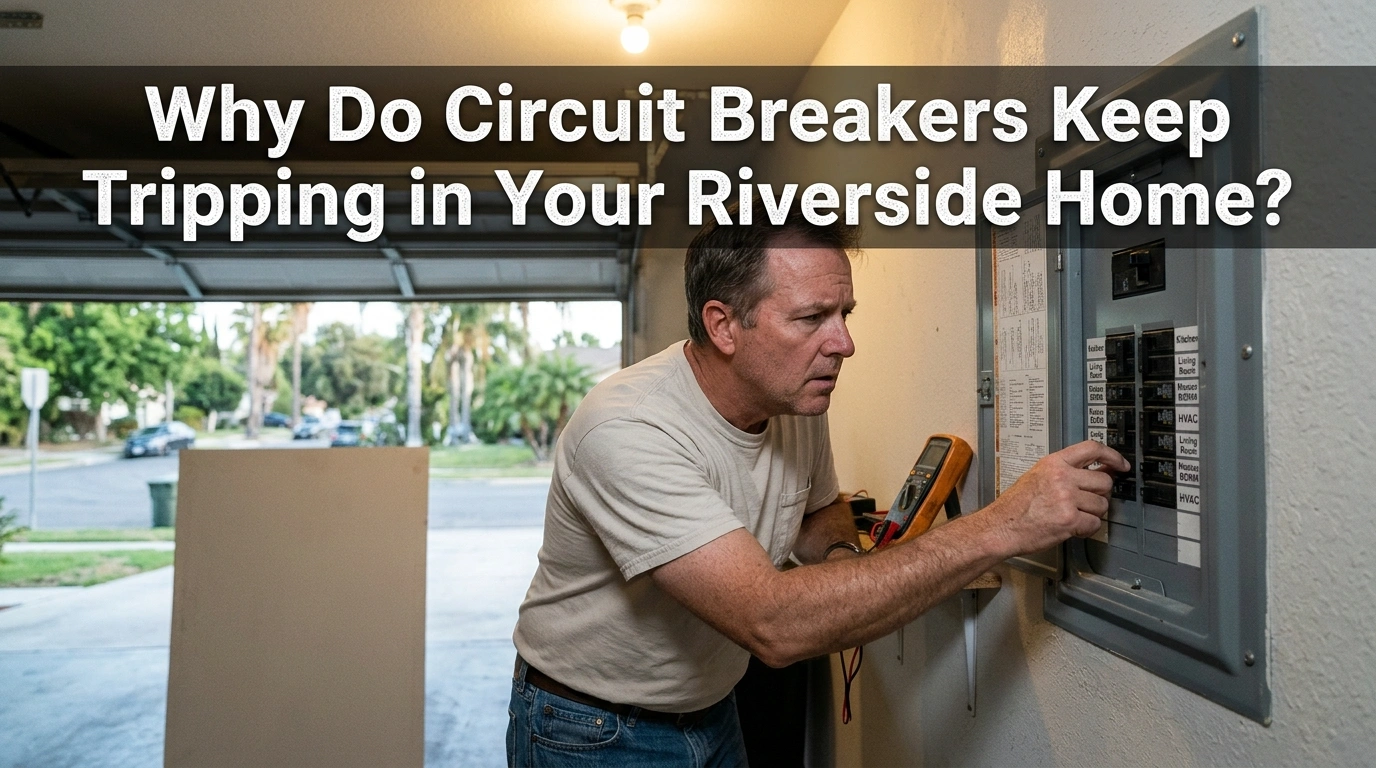
If the breaker has tripped one time after multiple high-power devices are operating on the same circuit, it may just have been protecting an overloaded circuit. Frequent circuit breaker tripping is different. An electrical overload, fault, faulty wiring, or a breaker issue could all be responsible for a breaker repeatedly tripping in your Riverside, CA, home.
This guide discusses common reasons, safe tests, warning signs, and when circuit and/or panel work in your home may be necessary.
What Does a Tripping Breaker Mean?
A circuit breaker is a switch that protects a branch circuit from exceeding the amount of current that the wiring can handle. The breaker is designed to trip and stop current from flowing if the current flow becomes excessive or if there is a fault, to prevent overheating and damage to the electrical circuit.
A tripped breaker is a protective response. An endless number of resets without diagnosis can leave the issue unresolved. The air conditioning, electric water heater, pool equipment, kitchen appliances, and EV chargers can create significant demand in Riverside homes.
5 Common Causes of Frequent Breaker Trips
The trip pattern can offer useful clues. Note what was running when the breaker opened.
Overloaded Circuit
When devices consume more power than a circuit can safely make available, it results in a circuit overload. This can be caused by high-wattage appliances on a common circuit. If the breaker trips only when multiple devices are in use, it is possible that it is an overload issue. It can be accomplished by load redistribution or upgrading the circuit.
Electrical Short Circuit
A short circuit happens when current flows along an unsafe route. It can be caused by damaged insulation, loose connections, or a malfunctioning appliance. If the breaker blows right away when a specific appliance is plugged in, unplug it. Any burning smells, scorch marks, sparks, or buzzing should also be addressed immediately.
Ground Fault
A ground fault occurs when electricity takes an unintended path to ground. These faults can be found near bathrooms, kitchens, garages, outside outlets, and any location where moisture can be found. Many of these locations can be protected from shock hazards by GFCI protection. When a GFCI outlet or a GFCI circuit breaker trips frequently, the problem may be caused by moisture, equipment connected to the outlet or circuit breaker, wiring, or the protective device.
Faulty Circuit Breaker
A broken circuit breaker could open even if there is only a slight current. Always try to replace the circuit breaker after testing because faults and overloading can give similar indications.
Wiring Problems
Damaged insulation, loose terminals, deteriorated connections, and improper repairs can cause electrical issues. Flickering lights, warm outlets, unusual odors, or buzzing may accompany the problem. There may be equipment installed in older Riverside homes that has been adapted for reduced electrical consumption. Those limitations can be revealed by newer appliances and equipment.
What Can You Safely Check?
When a circuit blows, unplug or turn off appliances from that circuit and find out what the cause of the loss of power is. It can be reset once if there are no signs of smoke, burning, sparks, heat, or damage.
Then watch what happens:
- It stays on: A temporary overload may have caused the trip.
- It trips when one appliance runs: The appliance or its circuit may be faulty.
- It trips immediately: A short, ground fault, or breaker problem may exist.
- It keeps tripping with a little load: Professional troubleshooting is needed.
Never open the panel cover, touch exposed wiring, bypass the breaker, or replace a panel without knowledge. These actions may lead to contact with energized parts and produce other hazards.
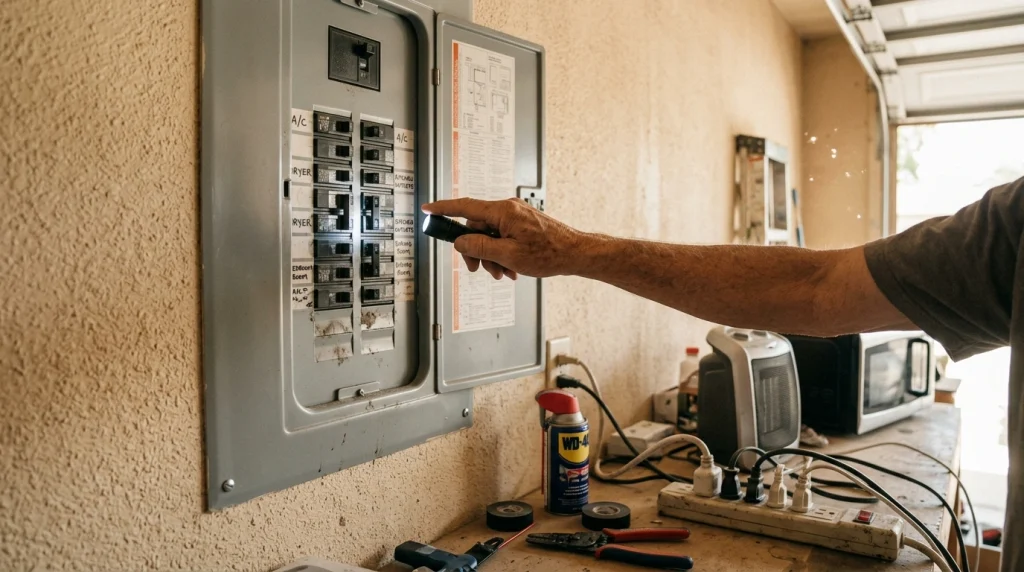
When Should You Call an Electrician?
One obvious overload is different from a breaker that trips repeatedly. When you can’t see a simple cause, electrical troubleshooting by a professional can help find the problem, whether it is at an outlet, appliance, branch circuit, panel, or wiring.
Call a qualified residential electrician when you notice:
- Repeated trips on the same circuit
- Burning or melted odors
- Warm, loose, or discolored outlets
- Buzzing, crackling, or sparking
- Flickering lights with other electrical symptoms
- A breaker that will not stay reset
- Problems after installing major electrical equipment
A professional can check out voltage, check the connections, analyze the load, and determine the proper repair.
Does Your Riverside Home Need a Panel Upgrade?
When a circuit trips over and over again, it doesn’t necessarily mean the electrical panel needs replacing. One of the main questions is whether the existing system is capable of safely serving the electrical needs of the home as they currently are and as they are forecast to be in the future.
It is important to know if central air, pool equipment, electric appliances, or an EV charger has been added to a Riverside property. A load assessment can determine if it’s a single-circuit problem or if there is a problem with the overall load.
| Breaker behavior | Possible concern |
| Trips during heavy use | Circuit overload |
| Trips with one appliance | Appliance or circuit fault |
| Trips immediately | Short or ground fault |
| The same breaker trips with a light load | Breaker or wiring problem |
| Several circuits have issues | Panel or service concern |
This may mean repairing the circuit, the breaker panel, the wiring, or replacing the breaker. A panel upgrade is only necessary if more capacity is required or the system needs to be upgraded.
How to Reduce Future Breaker Trips
Once the cause is repaired, a few habits can reduce unnecessary electrical strain. Don’t overload circuits or use extension cords as a long-term solution for equipment requiring dedicated power. Watch for flickering lights, warm outlets, unusual odors, or increasingly frequent trips. These may be pre-warning indicators.
Have an electricity assessment done before installing an EV charger, hot tub, workshop equipment, or new air-conditioning equipment. Proper circuit planning can prevent overloads.
Frequently Asked Questions
Why does my breaker keep tripping?
Typically, these are due to circuit overloads, short circuits, ground faults, faulty breakers, and wiring issues. When a breaker trips after it is apparent that loads are present, stop repeatedly resetting the breaker. Professional electrical troubleshooting will determine if there’s a fault in the appliance, circuit, wiring, or the panel.
Is frequent breaker tripping dangerous?
It can be, particularly when trips are not triggered by a clear overloading or when they happen in conjunction with burning smells, heat, sparks, buzzing, or damaged outlets. Excess current or another fault may be causing the breaker to trip. Discontinue any use of the involved circuit and make a request for an inspection if the issue persists.
Can I fix a tripping breaker myself?
If your breaker trips, it’s usually safe to reset it once; just make sure there aren’t any obvious warning signs. But if it keeps happening, you need to be more careful. Unless you have proper training, don’t try to open the panel or replace the breaker on your own. You have to figure out what’s causing the problem before you do any repairs.
Do frequent trips mean I need a new panel?
Not necessarily. If it’s just one overloaded circuit, sometimes all you need is to move some things around or repair that circuit instead of replacing the whole panel. But if several circuits are acting up, or the panel can’t keep up, or you spot other issues, it might be time for an upgrade. The best move is to have an electrician check the system’s load and condition before you make any big decisions.
Final Thoughts: Do Not Ignore Repeated Trips
When a circuit breaker trips, it’s often the system’s way of telling you something needs attention. In a Riverside home, the underlying cause could be an overloaded circuit, a bad appliance, a ground fault, wiring trouble, or even a defective breaker.
If the problem keeps returning, focus on finding the cause rather than repeatedly resetting the breaker. For homeowners who need electrical repair in Riverside, CA, Fowles Electric Inc can assess the problem and help determine the appropriate next step.