The EV charger installation cost for a Redlands home depends on the charger, wiring distance, panel space, and electrical capacity. Southern California Edison says Level 2 chargers start at about $400. SCE also says installation often runs from $400 to $1,500 before any needed panel upgrade. EPA gives a wider installation range of about $300 to $2,000 because every home is different.
The price can stay near the lower end when the panel has enough room and the charger is close by. It can rise when new wiring must travel farther, the panel needs work, or the home’s electrical service cannot safely support the new load. Some qualifying SCE customers may also get help with panel upgrade costs through the Charge Ready Home program.
How Much Does It Cost to Install an EV Charger at Home?
There is no single price that fits every home. SCE currently says Level 2 charging equipment starts near $400, while installation often costs $400 to $1,500. EPA puts Level 2 equipment at about $400 to $1,000 and installation at $300 to $2,000, based on the home’s setup. Panel or service upgrades can add much more.
This is why the cost to install EV charger at home should be based on the actual property. Two Redlands homes can use the same charger but have very different project costs.
One home may already have panel space and a short path to the garage. Another may need a long wire run, new breaker space, or an electrical panel upgrade.
A site check helps show which type of project you have before work begins.
What Affects EV Charger Installation Cost?
The biggest cost factors are usually the charger power, distance from the panel, electrical capacity, wiring route, and any panel work needed.
The charger itself is only one part of the total EV charger installation cost. A simple garage setup can require much less work than an outdoor charger on the other side of a house.
Here are the main items an electrician will look at.
Charger Location
A charger close to the electrical panel is often easier to install. Less cable, conduit, and labor may be needed.
The price can rise when the charger is far from the panel. Wiring may need to pass through walls, ceilings, attics, crawl spaces, or outdoor areas.
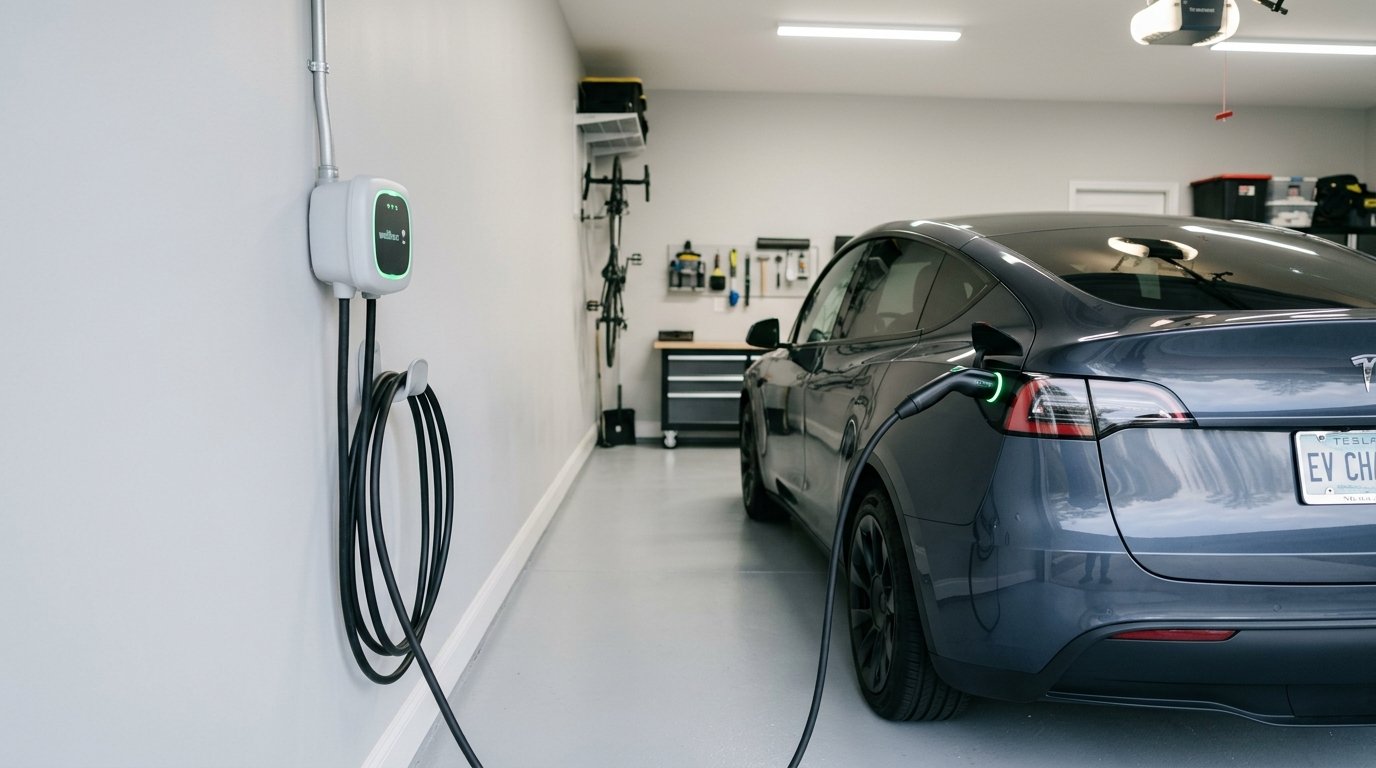
Garage installation is common for home charging. Outdoor charging is also possible when the charger and other equipment are rated for outdoor use. The U.S. Department of Energy notes that residential chargers are often placed in garages, but outdoor installations can also be used with the right equipment.
The best location should balance cost, safe wiring, parking position, and easy daily charging.
Charger Amperage
A higher-power charger may need a larger electrical circuit. That can change the size of the breaker, wire, conduit, and other parts used for the job.
It can also affect the load placed on your home’s electrical system.
This does not mean every homeowner needs the fastest charger possible. Your daily driving, EV charging limit, panel capacity, and overnight charging time all matter.
A licensed electrician can help choose a charging level that works with both the vehicle and the home.
Distance From the Electrical Panel
Longer wire runs usually mean more material and more labor. This is one reason the home EV charger installation cost can vary so much from one property to another.
For example, a panel on the inside wall of a garage may make the job simple. A panel on the opposite side of the home may take more planning and electrical work.
Wall type can also matter. Running a circuit through an open garage wall may be easier than working through finished rooms or tight spaces.
A quote should be based on the real wire path, not only the straight-line distance between the panel and the car.
Why Is Level 2 Charging Common at Home?
Level 2 charging is popular because it gives many EV owners enough charging speed for daily home use. It normally uses a 240-volt electrical supply in a home.
The California Energy Commission says Level 2 chargers use 208 to 240 volts and can add about 14 to 35 miles of range per hour. The exact result depends on the charger and vehicle.
Level 1 charging uses a normal 120-volt supply and is slower. It can still work for drivers with low daily mileage or plenty of time between trips.
For drivers with longer commutes or larger batteries, Level 2 often makes home charging much easier. The Department of Energy notes that many EV owners use Level 2 when they need faster charging or have less time available between drives.
What Is the Level 2 EV Charger Installation Cost?
The level 2 EV charger installation cost is made up of two main parts: the charger and the electrical work.
SCE says Level 2 chargers start at around $400, while installations often range from $400 to $1,500 before panel upgrades. EPA gives a wider equipment range of $400 to $1,000 and an installation range of $300 to $2,000.
These figures are useful for planning, but they are not a fixed Redlands price.
A simple installation may only need a new dedicated circuit and nearby charger location. A harder project may need a long wiring run, panel changes, or other electrical work.
That is why a site check is the best way to learn the real cost to install Level 2 charger at home.
Do You Need a Dedicated 240-Volt Circuit?
Many Level 2 home chargers use a dedicated 240-volt circuit. The circuit must be sized for the charger and installed for the electrical load it will carry.
EV charging is treated as a continuous electrical load under the National Electrical Code. The Department of Energy notes that NEC Article 625 covers much of the electrical information used for EV charging equipment.
An electrician should check the charger specifications before choosing the breaker and wire size.
Do not buy a high-amperage charger first and assume the home can support it. Checking panel capacity and the planned charging load first can prevent extra work later.
Do You Need a Panel Upgrade for a Level 2 Charger?
Not always. A Level 2 charger does not automatically mean you need a 200 amp panel.
An electrician should first check your current electrical panel capacity and complete a load calculation when needed. The Department of Energy notes that some homes may not have enough capacity for Level 2 charging, while others can support a new circuit without a full panel upgrade.
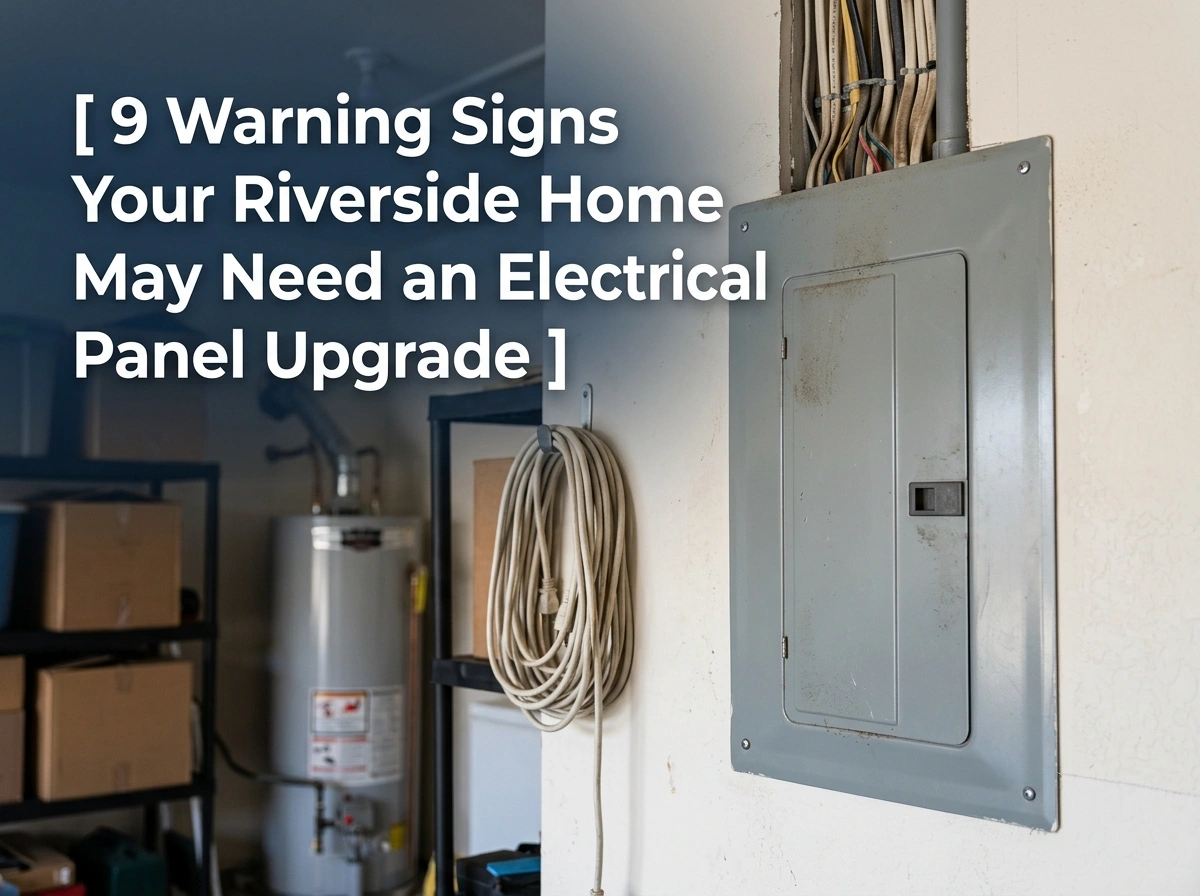
The electrician may look at large loads already in the home. These can include air conditioning, electric cooking, dryers, water heaters, pool equipment, and other high-use devices.
If the panel has enough capacity, the project may only need a new circuit.
If it does not, a panel upgrade or another approved solution may be needed.
For more information about deciding what to do with an older or limited panel, read our guide to electrical panel repair vs. replacement.
How Much Can a Panel Upgrade Add?
A panel upgrade can become one of the largest parts of the project. SCE’s Charge Ready Home FAQ says the average panel upgrade used to set its program rebate is about $4,200. Your actual cost can be higher or lower based on the property and work needed.
A panel change may involve more than replacing the box on the wall. The job can depend on the existing electrical service, equipment condition, panel location, utility needs, permits, and other site details.
This is why homeowners should not add $4,200 to every EV charger estimate.
Some homes do not need a panel upgrade at all. Others may need more work than the programme’s average figure suggests.
Can SCE Help Pay for a Panel Upgrade?
Yes, some qualifying Southern California Edison customers may be able to use SCE’s Charge Ready Home program.
As of August 2026, SCE says qualifying low-income households may receive up to $4,200. Eligible residents in designated disadvantaged communities may receive up to $2,100. The program is aimed at single-family homes that need electrical panel work to support Level 2 EV charging.
The program is useful because the panel upgrade can be the part that makes the cost of installing EV charger at home much higher.
However, not every SCE customer qualifies. Homeowners should check current rules before making plans around the rebate.
What Does SCE Charge Ready Home Require?
The current program has specific rules. It is not a general rebate for every charger installed at every SCE home.
SCE says the existing panel must be below 200 amps for the panel upgrade program. The work is designed to upgrade the panel to 200 amps and add a dedicated 240-volt circuit that supports an in-home Level 2 charger.
Participants must also install a Level 2 charger within 180 days of receiving the panel upgrade rebate. SCE allows the Level 2 charger to be hardwired or plug-in under its current program rules.
Because rebate terms can change, check SCE’s current program details before starting work.
Hardwired Charger or NEMA Outlet: Which Is Better?
Both setups can work, but the better choice depends on your charger, home, and charging needs.
A hardwired EV charger connects directly to its electrical circuit. A plug-in charger uses a compatible 240-volt receptacle, often called a NEMA outlet.
A hardwired setup can make sense when the charger will stay in one place for a long time. Plug-in units can give some owners more flexibility.
The electrical work still needs to match the charger load in either case. A plug does not remove the need for correct circuit sizing, panel capacity, safe equipment, and code-compliant installation.
For a permanent home charger, ask the electrician which setup makes the most sense for your property rather than choosing only by the lowest starting price.
Does the Charger Plug Type Matter?
Yes. Make sure the charger works with your EV before buying it.
EV charging equipment may use different connector types. SAE J1772 has long been used for conductive EV charging in North America. SAE J3400 now defines the North American Charging System, also known as NACS.
This matters when choosing equipment such as a Tesla Wall Connector or another home EVSE.
Some drivers may also use approved adapters. Still, it is easier to plan the charger and connector around the vehicle or vehicles you expect to charge.
Connector choice usually does not decide the whole installation price. Electrical power needs, circuit size, and panel capacity often have a much larger effect.
Does Redlands Require a Permit for an EV Charger?
EV charger work may require a local electrical permit, based on the type of installation. The City of Redlands has an expedited review process for electric vehicle charging stations and provides an EV charging station checklist through its Building & Safety Division.
Permit needs can affect the project process and final electric car charger installation cost.
The City also handles electrical permits and inspections. Larger work, such as an electrical panel upgrade, has its own permit requirements.
A local electrician can check what applies to the planned work before the installation starts.
For local service information, visit the Redlands electrician service area page.
How Can You Keep EV Charger Installation Costs Under Control?
Start by choosing a charger based on what you actually need. A larger charger is not always better if your car cannot use the extra power or your daily drive is short.
Next, think about charger location. Placing the charger closer to the electrical panel may reduce wiring and labor when the location still works well for parking.
Most of all, have the electrical panel checked before buying equipment. This can show whether there is enough capacity for the charger you want.
Redlands homeowners who qualify should also check the SCE Charge Ready Home program before starting a panel upgrade. A rebate can make a major difference when panel work is needed.
For help planning the circuit, charger size, and installation, see Fowles Electric’s EV charger installation service.
What Should an EV Charger Quote Include?
A useful quote should show more than one total number. You should understand what electrical work is included and what could change the price.
Ask about the charger circuit, breaker, wire run, conduit, charger mounting, panel work, and permit needs. If the project may require a panel upgrade, that should be clear before work starts.
You should also tell the electrician which EV and charger you plan to use. Charger amperage can change circuit needs.
A clear quote makes it easier to compare the real EV charger install cost instead of choosing an estimate that leaves out needed work.
Frequently Asked Questions
How much does it cost to install an EV charger at home?
SCE says Level 2 installations often run from $400 to $1,500, plus the charger and any panel upgrade that may be needed. EPA gives a broader installation range of $300 to $2,000 because home layouts and electrical needs can vary.
Do I need a 200 amp panel for an EV charger?
No. A 200 amp service is not required for every home EV charger. An electrician should check your current electrical load, available panel capacity, and charger size before deciding if an upgrade is needed.
How much is the SCE EV charger rebate?
SCE’s current Charge Ready Home program offers qualifying low-income customers up to $4,200 for eligible panel upgrade work. Some customers in designated disadvantaged communities may qualify for up to $2,100.
Does the SCE rebate pay for the EV charger itself?
Charge Ready Home mainly supports qualifying electrical panel upgrades needed for Level 2 home charging. The program has specific panel, income, location, contractor, and charger-installation rules, so homeowners should check current eligibility before work begins.
How fast is a Level 2 home charger?
The California Energy Commission says Level 2 chargers can provide about 14 to 35 miles of driving range per hour of charging. Actual charging speed depends on the EV, charger power, and other factors.
Is a hardwired EV charger better than a plug-in charger?
Both can work well when installed correctly. The better choice depends on the charger, electrical setup, parking location, and how permanent you want the installation to be.
Get an EV Charger Installation Quote in Redlands
The EV charger installation cost can be fairly simple when your panel has enough capacity and the charger sits close to it. The price can rise when the job needs a long wire run, higher electrical capacity, a panel upgrade, or other electrical work.
The best first step is to check the home’s electrical system before choosing the final charger size. Redlands homeowners should also check current SCE Charge Ready Home eligibility if a panel upgrade may be needed.
Fowles Electric provides residential EV charging help in Redlands and nearby Inland Empire communities. To discuss your charger, panel, and installation needs, contact Fowles Electric for the next step.