A commercial EV charging station installation starts with the site, not the charger. A business first needs to know who will use the chargers, how long cars will stay parked, how much electrical capacity is available, and where the equipment can be placed. These choices affect the charger type, electrical work, trenching, permits, and total project cost.
For Riverside businesses, utility planning also matters. Riverside Public Utilities has commercial EV programs and may need to be involved when a project needs grid-side electrical work. Planning these details early can help avoid costly changes after equipment has already been ordered.
What Is Commercial EV Charging Station Installation?
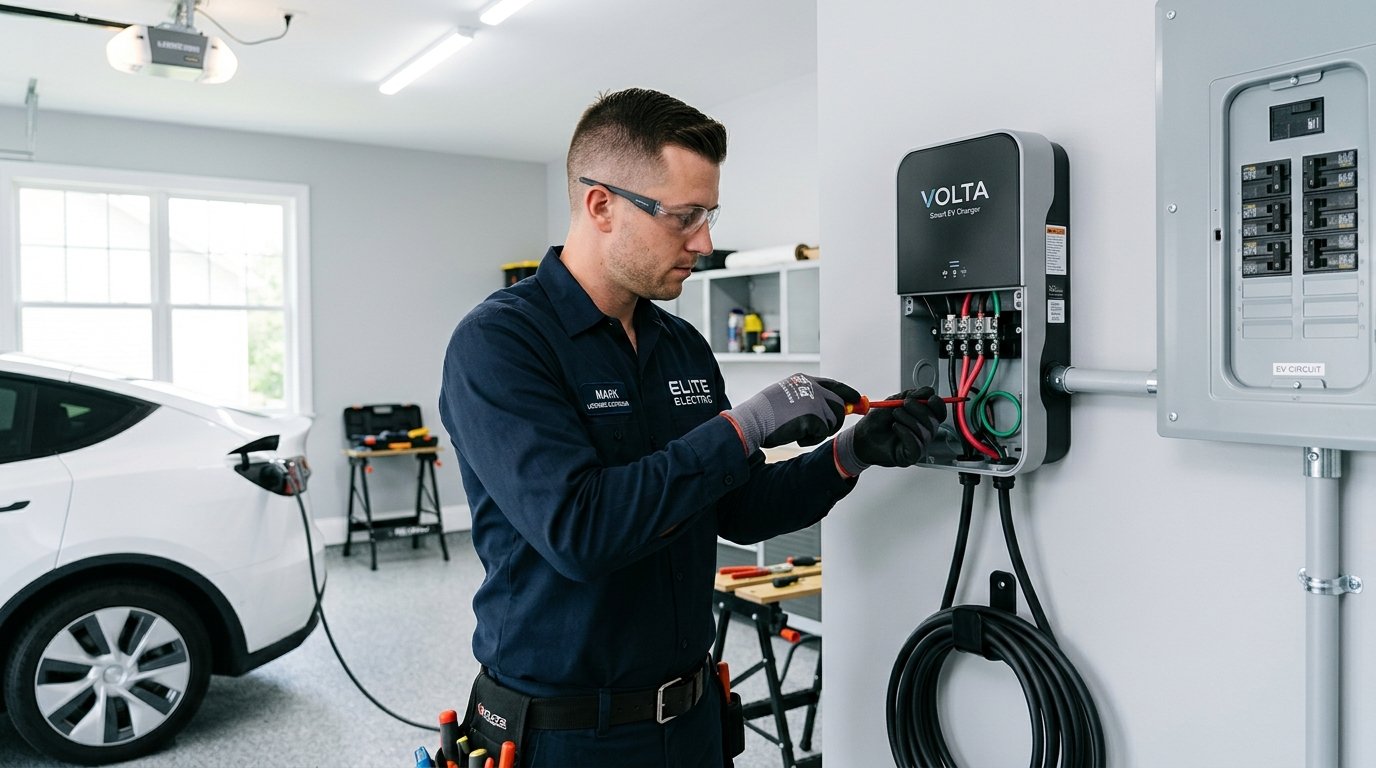
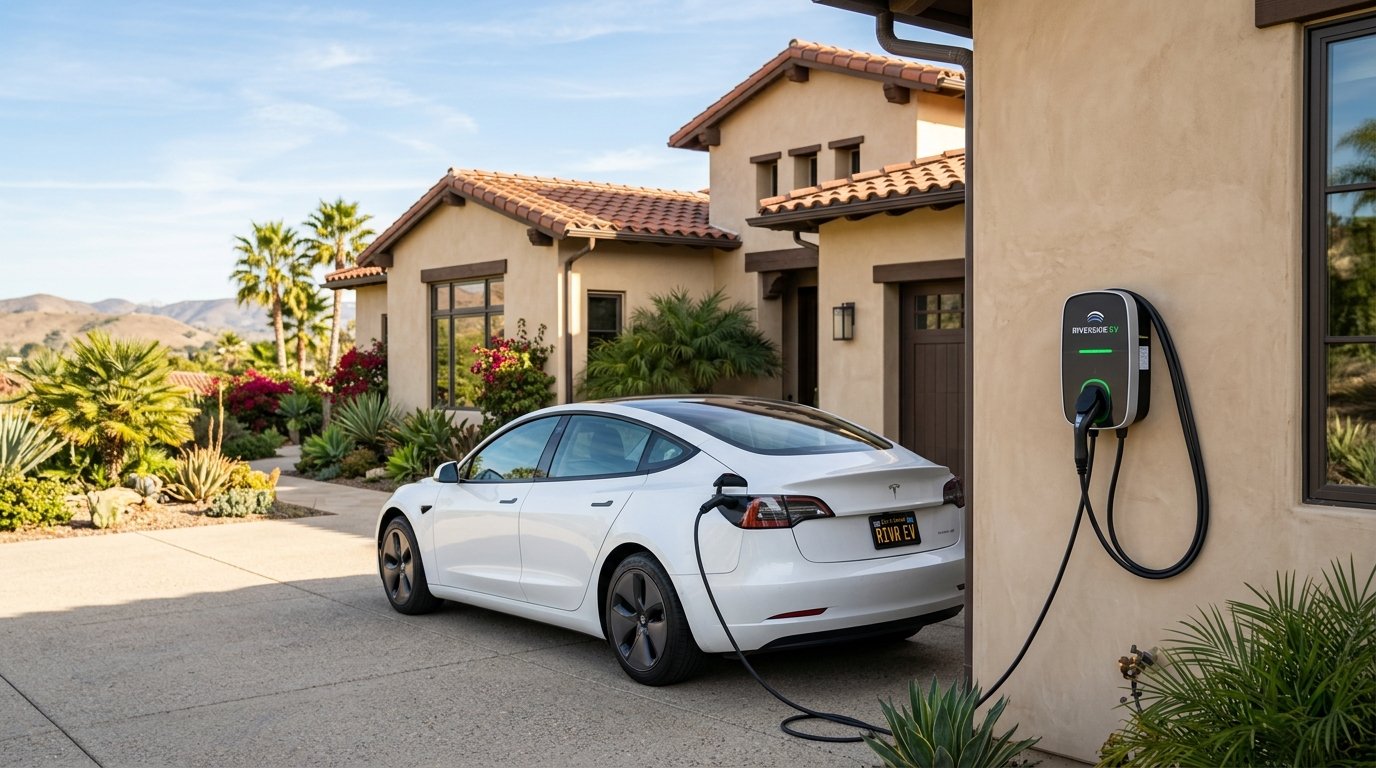
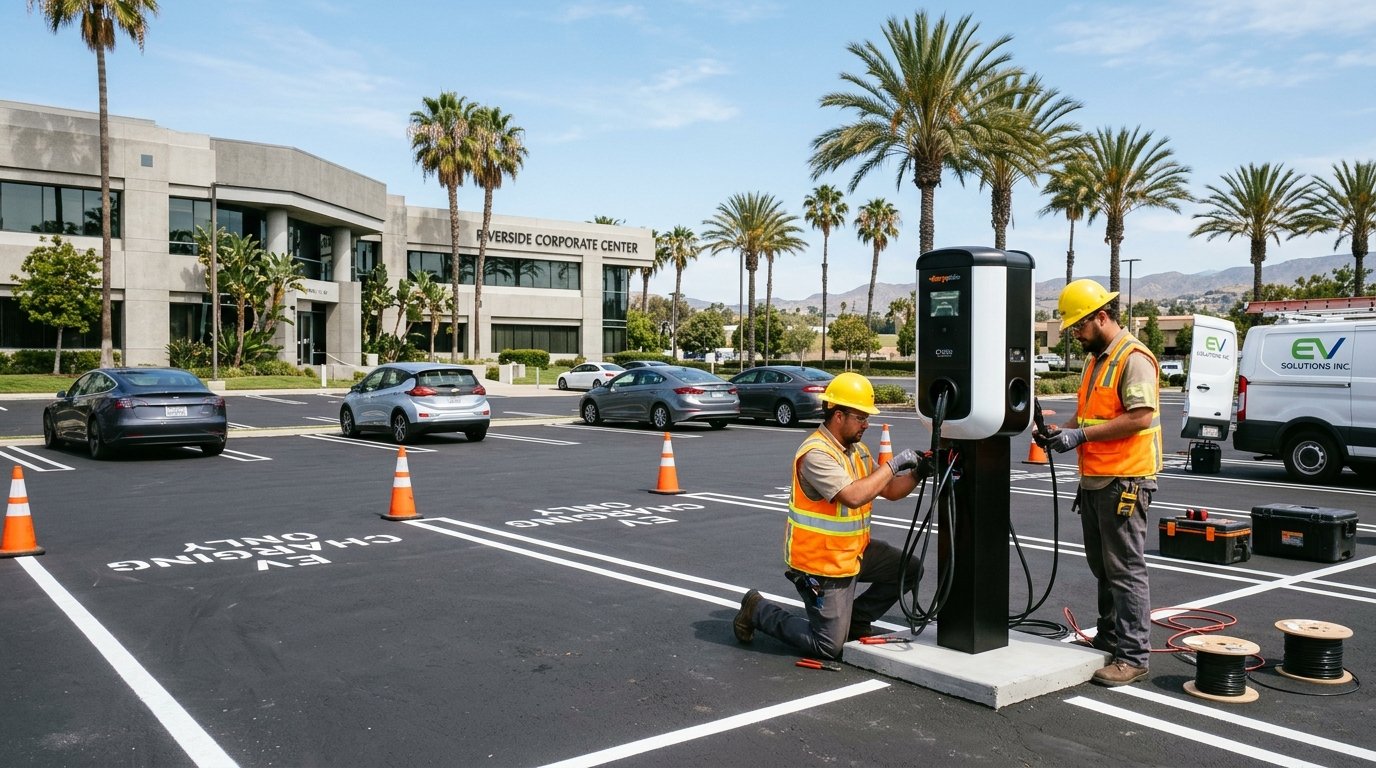
A commercial EV charging station installation is the process of adding EV charging equipment to a business or shared property. The project can include chargers, electrical circuits, panels, conduit, wiring, concrete work, networking, signs, and parking changes.
These projects can serve many types of properties. Common examples include offices, retail centers, apartment buildings, warehouses, hotels, parking lots, and vehicle fleets.
Commercial charging is more complex than adding one charger to a house. A site may need several chargers running at the same time. The project may also need new electrical equipment or utility work.
The U.S. Department of Energy recommends planning around expected users, charging needs, parking, equipment, costs, rules, and future operation before construction begins.
What Should You Check Before Installing Commercial EV Chargers?
Before you install commercial EV charger equipment, start with a full site review. The electrician needs to understand the property, electrical service, parking layout, and expected charging demand.
A good site review should also consider future growth. Installing two chargers today may solve the current need, but the business could need six or ten later.
Planning space and electrical capacity for future expansion can be easier than rebuilding the same area a few years later.
Who Will Use the Chargers?
The right charger depends on who will use it and how long vehicles normally stay parked.
An office building may have employees who park for most of the workday. An apartment building may have residents charging overnight. A retail property may have customers who stay for a much shorter time.
Fleet vehicles can have a different need again. The business may need several vehicles ready at set times each day.
These patterns help decide the number of chargers and the charging speed needed. The Department of Energy notes that expected travel, EV use, charging time, and number of vehicles should be reviewed before equipment is selected.
Where Will the Chargers Be Installed?
Charger location has a large effect on the work needed.
A charger close to the main electrical equipment may need a shorter wire run. Equipment across a large parking lot may require trenching, conduit, concrete work, and longer electrical runs.
Parking flow also matters. Chargers should be placed where drivers can reach them without blocking traffic or creating a poor parking layout.
For public or shared charging, the design may also need to consider signs, access, lighting, security, and accessible charging spaces. Riverside provides separate expedited EV charging permit checklists for non-residential and multifamily projects.
How Much Electrical Power Does a Commercial EV Charging Station Need?
There is no single power requirement for every commercial EV charging station. It depends on the number of chargers, charger output, and how many vehicles may charge at once.
This is why an electrical load review should happen early.
An electrician can check the existing service, main panel, switchgear, transformers, and other large electrical loads at the property. The goal is to see how much capacity is already being used and how much may be available for EV charging.
A small workplace project may fit within the current system. A larger parking lot or fast-charging site may need major electrical changes.
Why Is a Load Calculation Important?
A load calculation helps show how much electrical demand the property can safely support.
A business may already have large loads from HVAC systems, machinery, lighting, kitchens, elevators, or other equipment. Adding several EV chargers creates another load that must be planned correctly.
This does not always mean a full service upgrade is needed. Some sites may have enough capacity already.
Other properties may need a larger panel, new switchgear, transformer work, or changes on the utility side. Checking this before the equipment is purchased can prevent the project from being designed around power that is not available.
Level 2 or DC Fast Charging: Which Is Better?
For many businesses, the choice comes down to Level 2 charging or DC fast charging. Each has a different purpose.
Level 2 chargers are often a good match when cars stay parked for longer periods. The California Energy Commission states that Level 2 charging uses 208 to 240 volts.
DC fast chargers are designed for much faster charging. They can make sense where drivers need to charge and leave in a shorter period, but the electrical and site needs can be much larger.
The best choice is based on how people use the property, not simply which charger has the highest power.
When Does Level 2 Commercial Charging Make Sense?
Level 2 is common for workplaces, apartments, hotels, and other places where vehicles remain parked for hours.
The Department of Energy says Level 2 is the most common charger type used for workplace charging. One connector may also serve more than one vehicle during a workday when drivers share the station.
For an office, this can be a good balance between useful charging speed and electrical demand.
Level 2 chargers can also work well for commercial EV charging stations at multifamily properties because residents often have several hours available to charge.
When Does DC Fast Charging Make Sense?
DC fast charging is more suited to sites where quick charging is part of the business need.
Examples may include busy public charging sites, some retail locations, highway-related properties, or fleets that cannot leave vehicles parked for many hours.
The power demand is much higher than many Level 2 projects. That can make utility coordination and electrical planning more involved.
The Department of Energy also notes that DC fast charging is usually more expensive to install than workplace Level 2 charging.
A site should not choose DC fast charging only because it is faster. The extra speed should solve a real business or driver need.
What Affects Commercial EV Charger Installation Cost?
The commercial EV charger installation cost depends on much more than the charger price. Site work and electrical upgrades can become a large part of the budget.
The number of chargers matters, but so does their location. A charger placed beside existing electrical equipment may be much easier to install than one across a large parking lot.
Other cost factors can include trenching, conduit, new panels, switchgear, transformer changes, concrete repair, networking, permits, signs, and utility work.
Because these items vary so much, a fixed price without a site review can be misleading.
For a deeper breakdown of pricing factors, see our guide to commercial EV charging station cost.
Does Trenching Make Commercial Charging More Expensive?
It can. Trenching may be needed when electrical wiring has to cross a parking lot or other paved area.
The work may involve cutting or removing part of the surface, installing conduit, pulling electrical conductors, and repairing the area after the electrical work is complete.
The length and path of the trench can affect both labor and materials.
Good charger placement can sometimes reduce this work. However, choosing a poor parking location only to save on trenching may create other problems later.
The best layout should balance electrical cost, driver access, parking use, safety, and room for future chargers.
Do Commercial EV Chargers Need Networking?
Not every charger needs a network, but many commercial EV charging stations use one.
Networked chargers can give the property owner more control. Depending on the system, they may track charging sessions, manage access, collect payments, or show charger use.
This can be useful for public charging, employee programs, fleets, and apartment buildings.
Networking can also add ongoing fees. The Department of Energy notes that EV charging operating costs may include electricity, maintenance, and network fees.
Before choosing a charger, decide what information and control the business actually needs. Paying for features that will not be used may add cost without adding much value.
Can Load Management Reduce Electrical Upgrade Needs?
Load management can help some commercial projects control when and how much power chargers use.
Instead of every charger drawing its full available power at the same time, a management system may share available power between vehicles.
For example, a workplace may not need every vehicle to receive maximum charging speed for eight straight hours. Power can sometimes be shared while still giving drivers enough charge before they leave.
This type of setup can be useful when a property wants several charging ports but has limited electrical capacity.
It does not remove the need for proper design or load calculations. The system still needs to be planned around the building’s electrical limits and charger needs.
What Should Riverside Businesses Know About EV Charger Permits?
Commercial EV charging work in Riverside should be planned with the City’s Building and Safety Division.
Riverside provides specific expedited charging station checklists for both non-residential buildings and multifamily properties. The City also states that different projects may require plan review or approval from other departments based on the work involved.
RPU also states that a City electrical permit is required for a hardwired charger or a new or changed 240-volt power socket under its commercial rebate program.
Larger projects may involve more design and review than a simple charger installation. It is best to identify permit needs while the project is still being planned.
For local electrical service information, visit our Riverside electrician page.
When Does Riverside Public Utilities Need to Be Involved?
RPU should be part of the planning when the project may affect utility-side electrical service.
Large commercial EV charging installation projects can require more power than the property can receive through its current setup. In these cases, utility work may be needed before the chargers can operate.
RPU currently offers a Public Access EV Electrical Infrastructure Rebate for qualifying commercial customers. The program can reimburse up to 50% of eligible RPU grid-side upgrade costs, with a maximum of $50,000. RPU states that these grid-side improvements must be designed and completed by the utility.
This is another reason to contact the utility early rather than after the charger design is complete.
Are There RPU Rebates for Commercial EV Chargers?
Yes. Riverside Public Utilities currently offers a Public Access EV Charger Rebate for qualifying commercial customers.
RPU says eligible public-access locations can receive up to $5,000 per charging station for charger equipment. Certain schools, qualified affordable housing projects, and eligible DC fast charging sites may receive up to $10,000 per station. The program currently allows up to five charger rebates per business or multifamily location every five years.
Funding and rules can change, so do not build the project budget around a rebate until current eligibility has been checked.
This article focuses on installation planning. Any available incentive should be treated as a way to support a well-planned project, not as the reason to choose the wrong charger for the site.
What Is Different About Apartment and Multifamily EV Charging?
Apartment charging has several extra planning needs.
The property may have assigned or shared parking. Chargers may need to serve individual residents, guests, or several buildings. The owner may also need a way to track who uses electricity and how charging costs are handled.
Electrical capacity can become a larger issue as the number of chargers grows.
California also has EV charging rules within its building standards for multifamily and other projects. The 2025 California code cycle includes updated EV charging provisions, so new construction and some project types should be reviewed against the rules that apply to that site.
A Riverside apartment project should be planned with both future resident demand and current permit requirements in mind.
How Should a Business Plan for Future EV Charger Growth?
Start with the number of chargers needed today, then look several years ahead.
A property may install only a few chargers during the first phase. However, conduit routes, electrical rooms, panel space, and parking layouts can sometimes be planned for more chargers later.
This can reduce the need to disturb the same parking lot again.
Businesses should also think about charger use data. Networked systems can help show how often chargers are used and when more ports may be needed. The Department of Energy notes that charging use data can help site owners judge the need for added infrastructure.
Future-ready planning does not mean installing every charger now. It means avoiding choices that make later growth harder than it needs to be.
How Do You Choose a Commercial EV Charger Installer?
Choose an electrician who can look at the whole electrical project, not only mount charging equipment.
A commercial EV charger installation may involve load calculations, new circuits, panels, switchgear, conduit, trenching, permit work, and utility coordination.
The installer should also understand how the charging goal affects the electrical design. Workplace charging, public charging, apartment charging, and fleet charging do not all need the same setup.
Fowles Electric provides commercial electrical services for businesses in Riverside and across the Inland Empire.
A clear plan before construction can help the property owner understand what work is needed now and what may be needed later.
Frequently Asked Questions
How much does commercial EV charging station installation cost?
The commercial EV charging station cost depends on charger type, number of ports, electrical capacity, wiring distance, trenching, switchgear, permits, networking, and utility work. A site assessment is needed before a useful project price can be given.
Do I need a panel upgrade for commercial EV chargers?
Not always. An electrician should first check the existing electrical service and complete the needed load review. Some properties have enough capacity, while others may need panel, switchgear, transformer, or utility upgrades.
Are Level 2 chargers good for workplaces?
Yes. Level 2 chargers are commonly used for workplace charging because cars often remain parked for several hours. The Department of Energy identifies Level 2 as the most common charging type at workplaces.
Is DC fast charging better for a commercial property?
Not in every case. DC fast charging is useful when vehicles need to charge quickly, but it can require much more electrical power and cost more to install. Level 2 may be a better fit when vehicles stay parked for longer periods.
Does Riverside require permits for commercial EV chargers?
Commercial charger projects can require City electrical permits and plan review based on the work involved. Riverside also provides expedited EV charging checklists for non-residential and multifamily projects.
Does RPU offer help with commercial charging infrastructure?
Yes. RPU currently offers commercial charger incentives and a separate grid-side infrastructure program for qualifying public charging projects. Program funding and rules should be checked before work begins.
Plan Your Commercial EV Charging Installation in Riverside
A commercial EV charging station installation works best when the electrical system, parking layout, charger use, permits, and future growth are planned together. Choosing the chargers before checking the site can lead to extra cost or equipment that does not fit the real need.
For Riverside properties, early planning may also involve Riverside Public Utilities and the City’s Building and Safety Division. This is especially true when the project needs added electrical capacity, utility work, or several charging stations.
If you are planning workplace, retail, fleet, or multifamily commercial EV charging, contact Fowles Electric to discuss the electrical capacity, charger layout, and next steps for your Riverside property.