When the air conditioner starts, its compressor draws a surge of electricity to get the motor running. This temporary demand can cause a brief voltage drop in the electrical system, making nearby lights dim or flicker for a moment. In many homes, a slight change during startup is not necessarily a sign of an electrical fault.
However, noticeable dimming, repeated blinking, or lights that continue fluctuating after the AC starts deserve attention. These symptoms may point to an overloaded circuit, loose electrical connections, insufficient electrical capacity, or a problem with the utility supply. Understanding when the flickering occurs helps narrow down the cause and determine whether an electrician, HVAC technician, or utility provider should investigate.
What Happens When the AC Compressor Starts?
An HVAC compressor uses an electric motor. At startup, the motor draws more current than it needs once it reaches normal operating speed. This temporary demand is called inrush current, and it can briefly lower voltage in the wiring supplying the equipment and other connected loads.
Lights on the same supply path may dim as the compressor starts. Incandescent bulbs may show it clearly. LEDs may flicker too.
Is a Brief Dip Normal or a Warning Sign?
Slight, momentary dimming only at startup may not indicate a fault. Lights should quickly return to normal and stay steady. A strong dip, repeated blinking, or changes that continue during operation should not be dismissed as ordinary startup behavior.
| What you notice | What it may indicate |
| Slight dimming for an instant at startup | Normal motor inrush or modest voltage dip |
| Several rooms dim noticeably | Larger voltage drop or service-side issue |
| Flickering continues while AC runs | Wiring, connection, circuit, or equipment problem |
| Lights brighten and dim unpredictably | Possible neutral or supply connection issue |
| Breaker trips or burning smell appears | Potential electrical fault; stop using the system |
Professional electrical troubleshooting can help identify whether the voltage drop comes from the AC circuit, loose connections, or the home’s electrical supply.
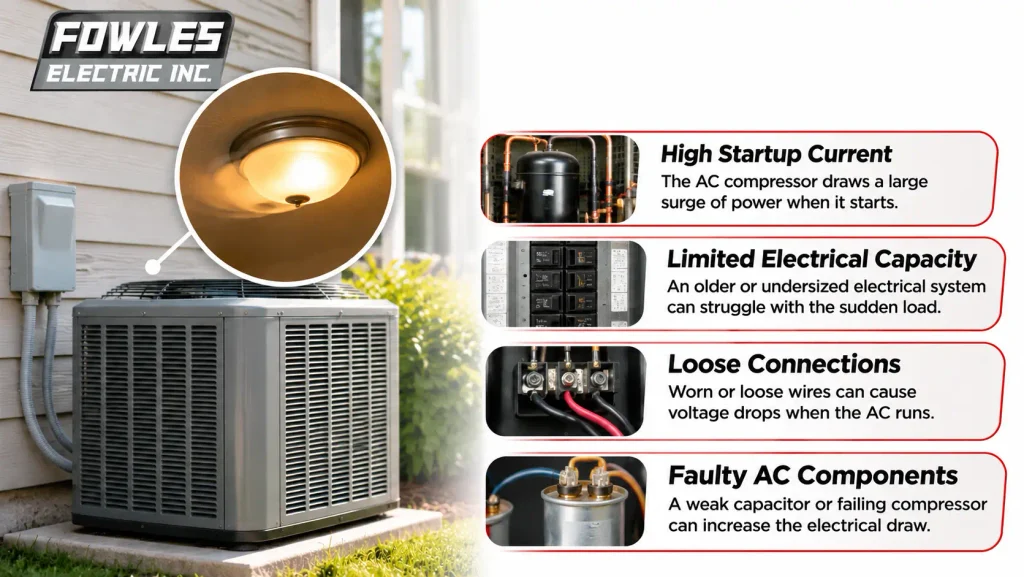
Four Reasons Lights Flicker When AC Turns On
1. Compressor starting current
A compressor with high starting demand can create a larger momentary voltage drop, especially on a long or heavily loaded circuit. A failing compressor or start component may also draw abnormal current and needs HVAC assessment.
2. Overloaded branch circuit
If the air conditioner and other substantial loads share a branch circuit, combined demand may exceed what that circuit is intended to supply. Circuit requirements depend on the unit’s nameplate. If the circuit breaker keeps tripping, the circuit needs further inspection. Never install a larger breaker to mask the problem.
3. Loose or deteriorated electrical connections
Loose electrical connections at a breaker, panel, splice, or service conductor can increase resistance and cause voltage fluctuations under load. Connections may overheat. Worsening flicker, buzzing, warmth, or a burning odor needs prompt attention.
4. Electrical service or utility voltage variation
Sometimes the problem is not limited to the AC circuit. Undersized conductors, unsuitable service capacity, a damaged neutral, or a utility-side disturbance can affect multiple rooms. Problems involving the home’s electrical service may require professional inspection, while similar symptoms at nearby homes point toward a possible utility supply issue.
How to Narrow Down the Source Safely
You can observe the pattern without opening the electrical panel or touching wiring. Note which rooms are affected and whether flickering continues after startup.
Note these clues:
- One room only: The lighting branch circuit or a local connection may need inspection.
- Several rooms at once: The panel, service conductors, neutral, or utility supply may be involved.
- Only during AC startup: Compressor inrush, circuit loading, and voltage drop deserve attention.
- At unrelated times: The cause may be separate from the air conditioner.
Never open the panel, tighten terminals, or repeatedly reset a tripping breaker. Leave live testing to a qualified professional.
Redlands, CA: Who Should Investigate a Supply Problem?
Southern California Edison supplies electricity to Redlands. If several rooms flicker, neighbors experience similar changes, or the problem appears alongside other signs of unstable service, contact SCE and ask about a power-quality concern. SCE states that it can inspect its equipment; if the issue is inside the home, it may recommend a licensed professional.
Redlands lists electrical permits through its Building and Safety Division. Work such as adding or altering circuits should be checked with the city before it begins; do not assume every repair or diagnostic visit requires a permit.
When to Call an Electrician or HVAC Technician
Fowles Electric Inc handles electrical troubleshooting when wiring, circuits, or service connections need professional assessment. An HVAC technician should inspect the air conditioner when the compressor hums, struggles to start, short-cycles, or causes a new and pronounced dip. Both trades may need to coordinate.
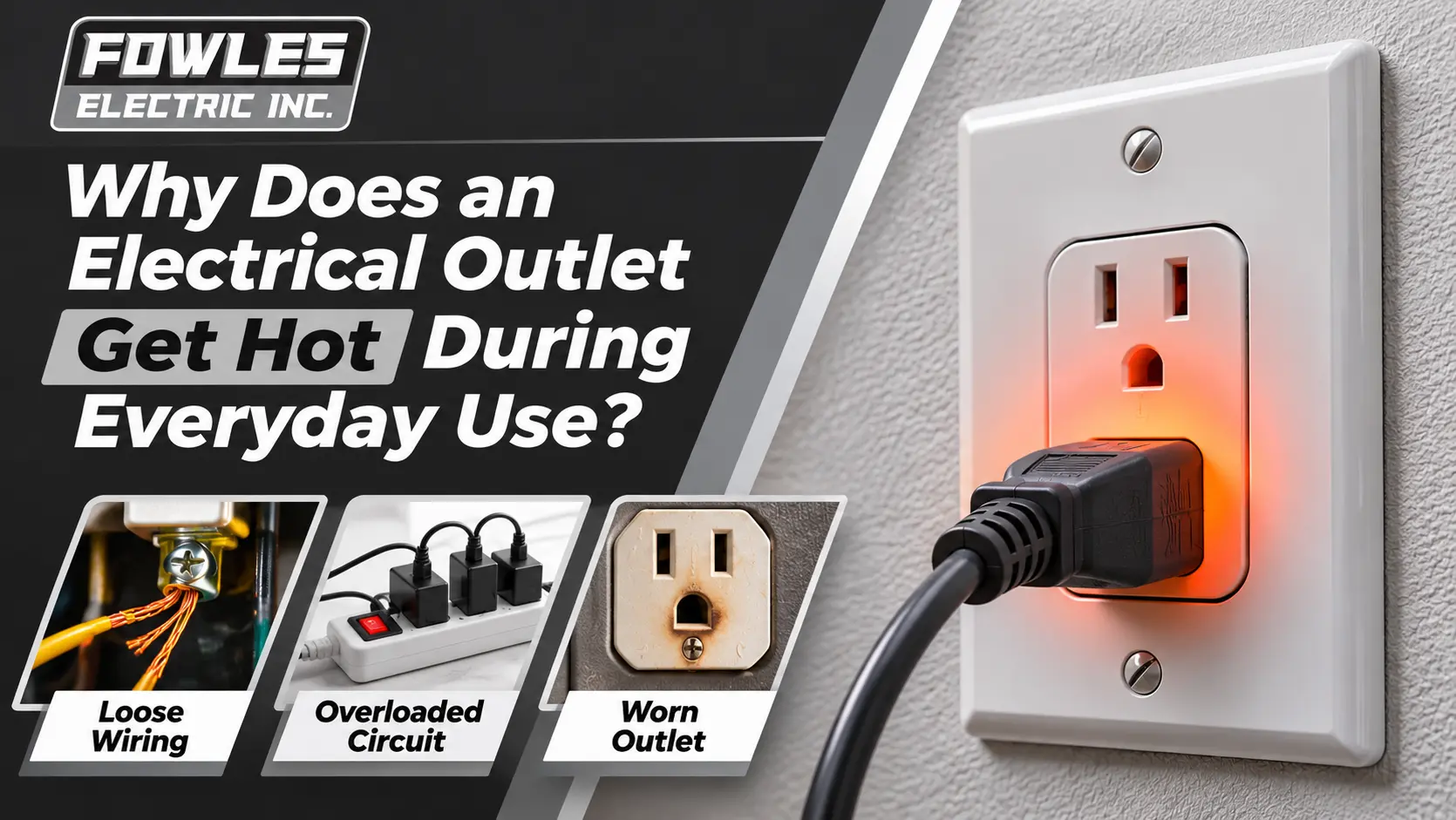
Treat these signs as urgent: burning smells, buzzing or crackling at the panel, hot outlets or switches, sparks, or a breaker that repeatedly trips. Stop using the affected equipment if it is safe to do so and arrange prompt professional help. If there is smoke or fire, leave and call emergency services.
Frequently Asked Questions
Why do lights dim when the AC starts?
The compressor draws a brief surge of current as its motor starts. That inrush current can cause a momentary voltage drop, especially when wiring is long or other loads are running. A slight, instant dip may be harmless, but pronounced or persistent dimming needs investigation.
Can a soft starter stop lights from flickering?
A compatible soft starter may reduce compressor startup current on some systems. It is not a universal fix and will not correct loose wiring, an overloaded circuit, a failing compressor, or a utility supply problem. Have HVAC and electrical professionals confirm suitability first.
Should I upgrade my electrical panel?
Not automatically. A panel upgrade is appropriate only when testing and a load calculation show that the existing service or equipment is inadequate, or the panel has a separate defect. Loose connections and utility issues need different repairs.
Who should I contact first: an electrician or the AC company?
Contact an HVAC technician if the unit struggles to start or makes unusual noises. Call an electrician if lights flicker throughout the home, breakers trip, or you suspect wiring or panel trouble. If the issue affects neighbors too, report it to SCE as well.
Final Thoughts: Find the Cause Behind the Voltage Dip
A brief dim at compressor startup is different from lights that repeatedly flicker, brighten, or remain unstable. The pattern helps identify whether the AC, home wiring, or utility supply needs attention. Fowles Electric Inc provides electrical repair services to help identify unsafe connections, circuit problems, and voltage concerns before a minor symptom becomes a larger issue.