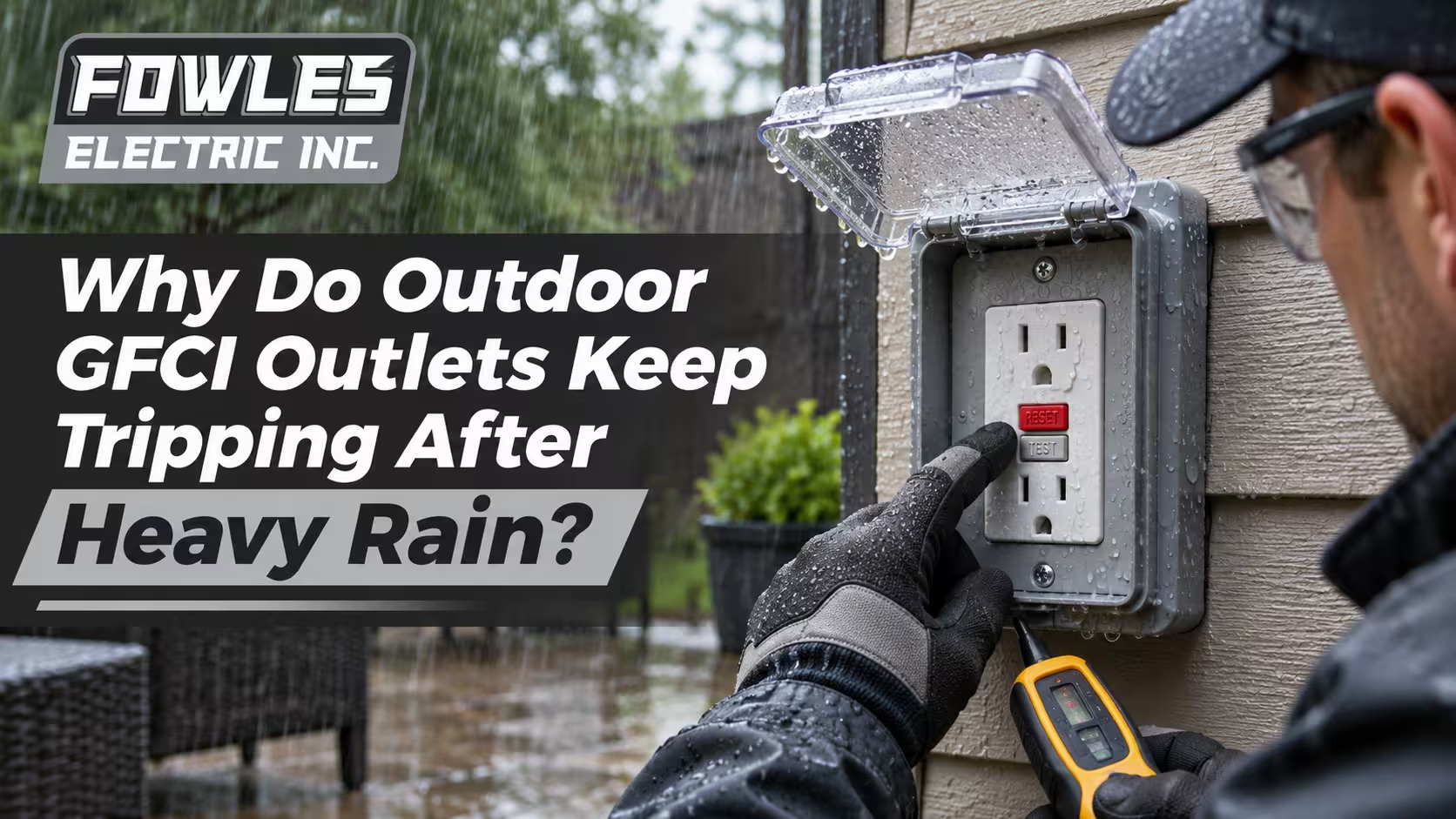
An outdoor GFCI outlet that keeps tripping after heavy rain may have moisture inside its electrical box, damaged wiring, or a wet connected device. The ground fault circuit interrupter (GFCI) detects unusual electrical current and shuts off power to reduce the risk of electric shock.
Repeated trips should not be ignored. Understanding where water enters and how it affects outdoor wiring helps homeowners recognize electrical hazards before they lead to equipment damage or more serious problems.
How Rain Triggers Outdoor GFCI Protection
A GFCI monitors the flow of electricity between the hot and neutral wires. When it detects an imbalance caused by leakage current, it interrupts the circuit.
Rain can create this imbalance when moisture reaches electrical connections or damaged insulation. Common symptoms include:
- An outside outlet that trips during or after rainfall.
- A patio outlet that will not reset.
- Outdoor lights losing power after a storm.
- A GFCI that trips even when nothing is plugged in.
Common Causes of Outdoor GFCI Tripping After Rain
Moisture does not always enter through the receptacle itself. The problem may involve connected equipment, nearby wiring, or another outlet on the same branch circuit.
| Possible Cause | How It Triggers the GFCI |
| Water inside the electrical box | Creates an unintended path for electrical current |
| Damaged outlet cover | Allows rainwater to reach the receptacle |
| Wet extension cords or equipment | Causes leakage current through damaged connections |
| Deteriorated wire insulation | Exposes electrical conductors to moisture |
| Loose or corroded connections | Allows moisture-related electrical faults |
| Downstream circuit fault | Causes the GFCI to detect a problem beyond the outlet |
Water Enters the Outlet or Electrical Box
Cracked covers, missing gaskets, loose fittings, and poorly sealed openings allow water ingress. Moisture can collect around the receptacle and create wet electrical connections.
Covers and Seals No Longer Protect the Outlet
A damaged outlet cover may fail to keep rain away from the receptacle. An appropriate weather-resistant receptacle and in-use cover help protect outdoor connections, including when a cord remains plugged in.
Connected Equipment Develops a Ground Fault
Outdoor lights, power tools, extension cords, and landscape equipment may have damaged plugs or insulation. Rainwater reaching these components can cause the GFCI to trip even when the outlet itself appears dry.
Wiring Problems Develop Behind the Outlet
Cracked wire insulation, corrosion, loose connections, or water inside a junction box can create electrical faults. The issue may also come from another device or outlet connected to the same circuit.
What the Tripping Pattern Can Tell You
The circumstances surrounding a trip can help narrow down the possible problem. These signs are clues, not a confirmed diagnosis.
| What Happens | Possible Problem |
| Trips during heavy rain | Moisture entering the outlet cover or box |
| Trips hours after rainfall | Water remains inside a box or wiring connection |
| Trips when equipment is connected | Wet or damaged cord, plug, or device |
| Trips with nothing plugged in | Moisture or a wiring fault inside the circuit |
| Will not reset | Active ground fault, damaged wiring, or defective GFCI |
What to Do When an Outdoor GFCI Trips
Do not repeatedly reset a wet outlet or bypass its GFCI protection. If you suspect water has entered the receptacle, stop using it and keep people away from the affected area.
Follow these safety steps:
- Stop using the outlet: Do not connect tools, lights, or extension cords to the affected receptacle.
- Avoid touching wet components: Do not open the cover, remove the receptacle, or attempt to dry internal electrical parts.
- Watch for serious warning signs: Burning smells, buzzing, sparks, or unusual warmth require prompt professional attention.
- Arrange an electrical inspection: Have a licensed electrician identify the source of the fault before power is restored.
When Does an Outdoor GFCI Need Professional Repair?
Repeated tripping after rainfall often points to a problem that requires more than a simple reset. Professional evaluation is especially important when you notice:
- Visible rust, corrosion, or water inside the outlet box.
- Cracked covers, damaged conduit, or exposed wiring.
- An outlet that trips whenever it rains.
- Multiple outdoor receptacles or lights losing power.
- A GFCI that refuses to reset after the surrounding area appears dry.
An electrician can inspect the electrical box, gasket, receptacle, connected devices, and downstream wiring. Electrical safety testing can help identify leakage current, insulation deterioration, loose connections, or a defective GFCI.
Fowles Electric Inc can evaluate exterior electrical outlet problems and determine whether wiring repairs, a replacement receptacle, or improved moisture protection is needed.
How to Prevent Future Rain-Related Electrical Problems
A few maintenance checks can help reduce moisture-related outlet problems:
- Inspect outdoor covers for cracks, loose hinges, and missing seals.
- Keep unused receptacles closed with suitable weather protection.
- Use outdoor-rated cords and equipment in good condition.
- Check visible electrical boxes for corrosion or damage.
- Arrange an inspection when an outlet repeatedly trips during storms.
GFCI devices covered by UL 943 provide ground fault protection, but that protection does not make wet or damaged wiring safe. The National Electrical Code (NEC) also addresses outdoor receptacle protection, so repairs should follow applicable electrical requirements.
Frequently Asked Questions
Can heavy rain cause an outdoor GFCI to trip?
Yes. Rainwater entering an outlet box, damaged cover, or connected device can create a ground fault. The GFCI interrupts power when it detects the resulting current imbalance.
Why does my outdoor GFCI trip after the rain has stopped?
Water may remain inside the electrical box, conduit, or wiring connections. The outlet can continue tripping until the moisture-related fault is properly identified and repaired.
Can outdoor lights cause a GFCI to trip?
Yes. A damaged fixture, wet connection, or deteriorated wire can cause leakage current. The GFCI may shut off power to protect the connected circuit.
Should I keep resetting a wet GFCI outlet?
No. Repeatedly resetting the outlet does not remove moisture or repair damaged wiring. Avoid using the receptacle until a qualified electrician has evaluated the problem.
Does a tripping outdoor GFCI always need replacement?
No. The GFCI may be responding correctly to a ground fault elsewhere in the circuit. An inspection helps determine whether the receptacle, wiring, cover, or connected equipment needs attention.
Final Thoughts: Do Not Ignore Outdoor GFCI Trips After Rain
Repeated outdoor GFCI trips often point to moisture intrusion, damaged insulation, or faulty electrical connections. Identifying the source helps prevent recurring power interruptions and reduces the risk of electrical hazards.
Fowles Electric Inc provides professional electrical support for outdoor outlet problems. Have persistent rain-related trips inspected rather than bypassing protection or repeatedly resetting the outlet.