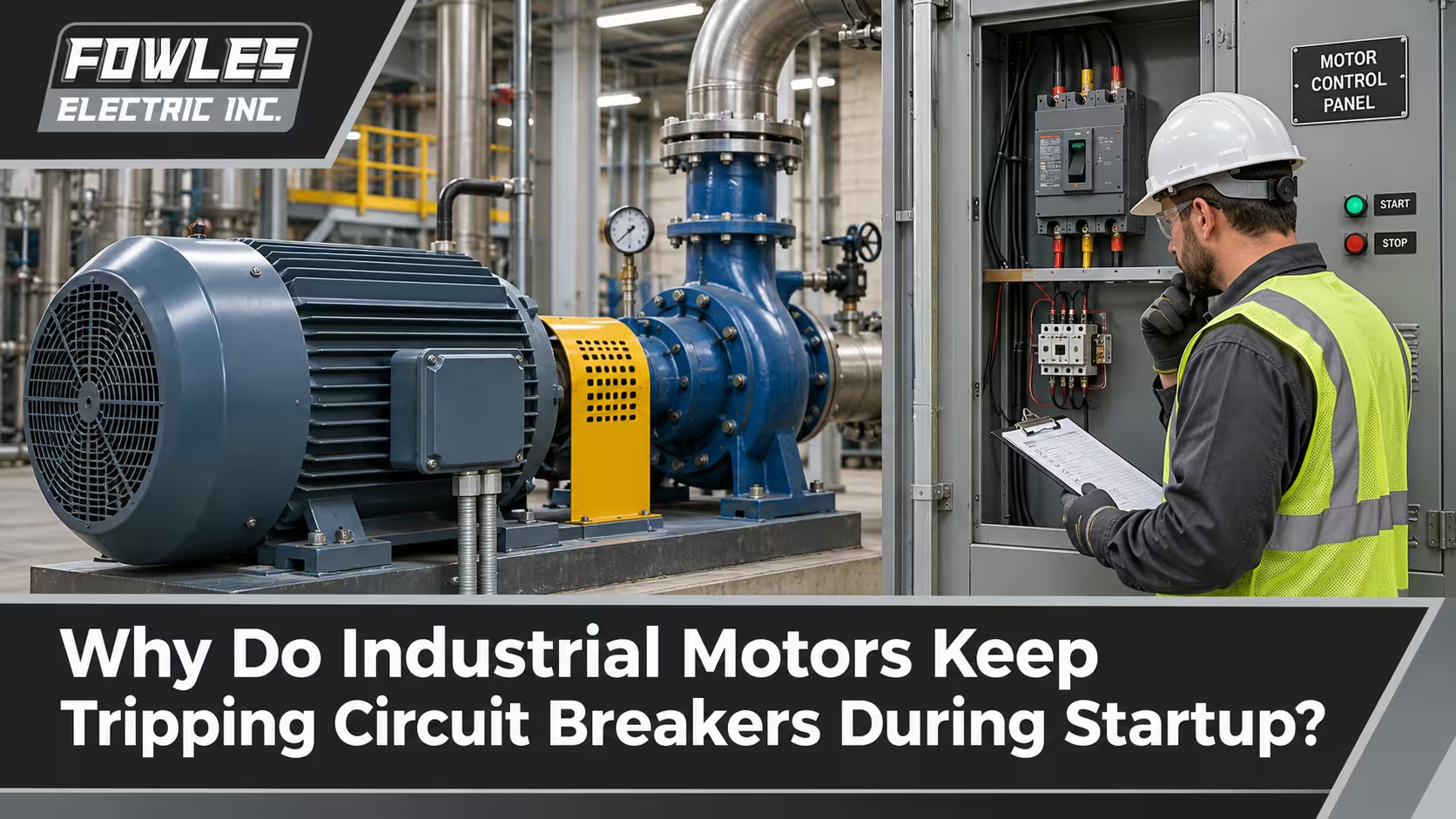
Industrial motors often draw more electrical current during startup than they need during normal operation. This temporary increase is expected, but problems arise when the current stays high for too long or exceeds the protection system’s limits. A breaker may trip before the motor reaches its normal operating speed.
Repeated startup trips can interrupt production, affect connected equipment, and make it difficult to identify the actual problem. Understanding the difference between normal motor starting current and an electrical or mechanical fault helps pinpoint why an industrial motor tripping breaker problem keeps occurring.
Startup Current Is Higher Than Normal Operating Current
When an industrial motor first receives power, it has not yet reached its operating speed. It draws a high amount of current to overcome inertia and begin rotating. This initial demand is known as motor inrush current or starting current.
Depending on the motor design and starting method, startup current may reach several times its normal full-load current. This is also known as locked rotor current when the motor is stationary. A breaker that is not properly matched to the motor’s starting characteristics may trip during this brief period.
| Motor condition | What happens |
| Normal startup | Current rises briefly, then drops as the motor accelerates |
| Slow acceleration | High current remains longer than expected |
| Locked rotor | Motor draws high current but does not turn properly |
| Repeated starts | Heat builds up in the motor and protection devices |
If a motor trips the breaker immediately after starting, an electrician checks whether the protective device is responding to a genuine fault or an expected starting surge.
Mechanical Load May Be Preventing the Motor From Starting
A motor may be electrically sound but unable to start because the connected equipment creates too much resistance. The motor needs additional torque to move the load, which may increase starting current and delay acceleration.
Common mechanical causes include:
- Jammed conveyor belts or rollers
- Pumps operating against excessive pressure
- Damaged bearings or tight shafts
- Misaligned couplings
- Equipment starting under a heavy load
For example, a conveyor motor may trip when the belt is full of material but start normally when unloaded. This pattern suggests that the equipment load, motor torque, or starting arrangement requires investigation.
An industrial electrician evaluates the motor alongside the driven equipment instead of assuming the breaker is defective.
Voltage or Phase Problems Can Disrupt Motor Startup
Three-phase motors depend on balanced voltage across all phases to operate correctly. When voltage drops or becomes unbalanced, the motor may produce less torque, draw uneven current, and take longer to accelerate.
Electrical conditions that may cause startup problems include:
- Low voltage during motor starting
- Phase imbalance between incoming supply lines
- Loose electrical connections
- Damaged conductors or terminals
- Supply problems affecting multiple machines
A motor tripping the breaker on startup may occur when voltage falls below starting demand, especially when several motors operate on the same electrical system. Voltage measurements and phase-current readings help determine whether the problem originates at the motor, branch circuit, motor control center (MCC), or incoming supply.
Motor Winding Faults and Electrical Damage
Damaged insulation, shorted winding turns, moisture intrusion, and deteriorating internal connections may cause excessive current during startup. These conditions can prevent the motor from operating normally and trigger overcurrent protection.
| Possible motor fault | Typical concern |
| Winding short | Excessive current and abnormal heating |
| Insulation breakdown | Leakage current or electrical fault |
| Internal connection damage | Unstable current and poor performance |
| Ground fault | Current escaping to ground and protective device operation |
If the industrial motor breaker trips immediately, the motor may require insulation testing, winding resistance checks, and additional electrical diagnostics. Continuing to restart a motor with a suspected winding fault may cause further damage.
Breaker, Overload Relay, or VFD: Which One Is Tripping?
Not every motor shutdown is caused by the circuit breaker. Industrial motor protection systems use different devices to respond to specific electrical conditions.
| Device | Why it may trip |
| Circuit breaker | Short circuit, excessive current, or magnetic trip response |
| Thermal overload relay | Sustained overload or prolonged high starting current |
| VFD | Overcurrent, undervoltage, overload, or drive-related fault |
| Ground fault protection | Current leakage to ground |
A breaker trip often points toward a circuit-level overcurrent or short-circuit concern, while an overload relay trip may indicate that the motor is drawing excessive current for too long. A variable frequency drive (VFD) may display a fault code that identifies the condition it detected.
Identifying which device actually stopped the motor is an important first step in industrial electrical troubleshooting.
Incorrect Protection Settings Can Trigger Repeated Trips
Motor protection must accommodate the motor’s normal startup current while still protecting conductors and equipment from dangerous faults. Incorrect settings or poor coordination between breakers, contactors, and overload relays may cause unnecessary shutdowns.
Common issues include:
- Breaker ratings or trip characteristics unsuitable for motor starting
- Overload relay settings that do not match the motor nameplate
- Poor coordination between upstream and downstream protection
- Incorrect VFD acceleration settings
- Voltage drop caused by circuit length or conductor conditions
Protection settings should never be increased simply to prevent trips. Motor protection coordination must account for the motor, wiring, starting method, and applicable electrical requirements, including NEC Article 430.
What an Industrial Electrician Checks During Diagnosis
When an industrial motor trips during startup, the diagnosis should follow the actual failure pattern rather than rely on repeated resets.
An industrial electrician typically evaluates:
- Motor nameplate ratings and full-load current
- Starting current and acceleration time
- Voltage across all three phases
- Current imbalance during startup
- Motor windings and insulation condition
- Breaker, contactor, and overload relay operation
- Mechanical resistance from the connected equipment
At facilities in Redlands, CA, motors serving pumps, production equipment, ventilation systems, and other machinery may operate under different load and starting conditions. The equipment type, operating cycle, and electrical supply all influence the troubleshooting process.
Fowles Electric Inc handles industrial electrical troubleshooting, helping identify motor circuit faults, protection issues, and equipment-related electrical problems that interrupt operation.
Frequently Asked Questions
Why does a motor trip the breaker immediately when starting?
A short circuit, locked rotor, severe voltage problem, or excessive startup current may cause an immediate trip. The specific cause depends on the motor, circuit, and protective device response.
Can a larger breaker stop a motor from tripping during startup?
Installing a larger breaker without checking the circuit is not a safe solution. It may leave wiring or equipment inadequately protected. Proper motor protection requires checking conductor ratings, motor data, and protection coordination.
Why does a motor start sometimes but trip at other times?
Changing loads, temperature, supply voltage, mechanical resistance, or repeated starts may affect motor starting performance. The difference between successful and failed starts can provide useful diagnostic information.
Does a VFD prevent startup breaker trips?
A properly selected and configured VFD may reduce starting current by controlling motor acceleration. However, it will not correct damaged windings, mechanical binding, supply problems, or incorrect protection settings.
Final Thoughts: Finding the Cause of Industrial Motor Startup Trips
An industrial motor tripping a breaker during startup may be experiencing normal inrush current that lasts too long, mechanical resistance, voltage imbalance, winding damage, or incorrectly coordinated protection. Identifying the exact device that trips and measuring the motor’s electrical behavior helps avoid unnecessary equipment replacement and recurring downtime.
Fowles Electric Inc provides industrial electrical services, including troubleshooting motor circuits, diagnosing electrical faults, and evaluating equipment protection to help businesses address recurring motor startup problems and restore reliable operation.